
Celebrate Sustainably This Independence Day

While the pandemic resulted in many Fourth of July events in 2020 being canceled or modified, annual celebrations will return in full force this year with in-person fireworks displays, parades and more. Not only is the Fourth of July one of the biggest holidays of the year, but between the single-use plastics and traffic jams, it’s also a day with a major negative impact on the environment.

Commemorating Independence Day in an eco-friendly manner is an ideal way to show your patriotism by taking steps to protect the future of this great nation we call home. With that in mind, here are a few tips to consider for reducing your carbon footprint this weekend to help improve the region’s air quality:

  • Green Your Travels – If you’re traveling over the holiday weekend, be conscious of how many extra items overall you’re packing to help lighten the load. The more weight trains, planes and automobiles have to carry, the more fuel they use, and the more harmful greenhouse gases are emitted into the atmosphere. Traveling by bus or train to your destination are the greenest options, but if you must fly, check to see if you can get an affordable, nonstop flight to help clear the air by cutting back on carbon emissions that come from takeoff and landing. If you are traveling by your own personal vehicle, perform routine maintenance steps ahead of time and follow the speed limit to help further reduce emissions and fuel consumption.
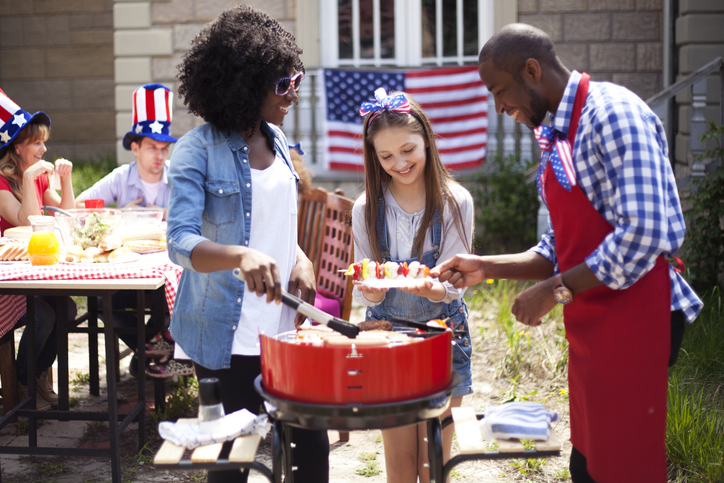
  • Opt for a Gas Grill – Breaking out the grill for a Fourth of July cookout is a fun and leisurely way to get outdoors and spend time with friends and family but poses a unique set of environmental challenges. From an air pollution standpoint, natural gas and propane grills burn the cleanest in terms of greenhouse gas emissions, volatile organic compounds (VOCs) and particulate matter. They also leave behind less waste than charcoal or wood grills. If you must use a charcoal grill, avoid petroleum-based lighter fluids and self-lighting charcoal that release petrochemicals into the atmosphere, and opt for an electric charcoal starter instead.
  • Freedom from Disposable Partyware – When shopping for supplies for your backyard barbeque, look for recyclable or compostable plates, cups and utensils rather than the kind that end up in the trash. Or, instead of buying tableware for one-time use, opt for your favorite set of dishes for the cookout this year that will save you money in the long run and help keep the air quality in healthy ranges. While you’ll probably still end up with items to recycle afterwards, you can do your part to keep waste at a minimum by putting out labeled bins for recycling and composting food scraps and other biodegradable items, too.
  • Choose Greener Fireworks – According to research from the National Oceanic and Atmospheric Administration (NOAA), the U.S. typically experiences the highest yearly amount of particulate matter air pollution on the Fourth of July due to fireworks. If you plan to host your own backyard show, enjoy a greener display by looking for eco-friendly, nitrogen-rich fireworks that produce less environment-harming smoke, and make sure to clean up all the debris afterwards. Otherwise, take your party to see the local fireworks display rather than shooting off your own.

Take action for cleaner air by throwing a little green into the mix of red, white and blue this Independence Day and continue to lead an eco-friendly lifestyle to help people all across St. Louis breathe easier every day, not just on special occasions. To learn more about the link between living greener and our air quality, visit our website, like us on Facebook or follow us on Twitter at @gatewaycleanair.

  

Spotlight On: The City of Collinsville

As a returning participant of the St. Louis Green Cities Challenge in 2020, the City of Collinsville’s outstanding efforts to be a green-conscious municipality is a testament to their forward-thinking approach and strong desire to improve the quality of life for present and future residents by considering the long-term significance of everyday decisions.

During the 2020 Challenge, Collinsville adopted its first Sustainability Plan to meet the community’s current needs without compromising the ability of future generations to do the same. Designed to make the city more operational and energy efficient, this noteworthy plan was divided into five focus areas: Transportation; Buildings, Grounds, and Lighting; Environmental Management; Land Use and Planning; and Community Development, Engagement, and Education. The city received public input and support from two open houses – in addition to an online survey – and has also ensured the relevance of the plan for years to come. The Sustainability Plan will be reviewed annually by city staff and the Cool Cities Committee to evaluate which policies have not been started, those that are in progress, are fully implemented and consideration to add or modify policies based on scientific research and/or emerging technologies.

Among the other impressive innovations put forth by the city during the 2020 Challenge to keep up with its sustainability goals was a “Goatscaping” program piloted by Willoughby Farm, which encompasses over 30 acres of wildlife preserve that offers opportunities for education and recreation in the heart of Collinsville. Through the “Goatscaping” program, the farm leases goats to privately owned residential properties within the city as an environmentally friendly way to clear unwanted weeds and invasive plants. Willoughby Farm plans to continue this program moving forward and further expand it this year. Moreover, the city partnered with Land of Goshen Community Market’s Beet Box, a mobile farmer’s market designed to increase access to fresh local produce and more comprehensive nutrition education for underserved residents. Every Monday from July to October, the city reserves space for the Beet Box in Woodland Park, directly across the street from Collinsville’s largest public housing development. Since sourcing food locally helps to cut down on emissions produced by large transport trucks, the less produce and supplies have to travel means that less waste is produced, resulting in a smaller environmental impact overall.

To further reduce environmental impact, the city discontinued spraying for mosquitoes last year. Those efforts in prior years ultimately had little impact on mosquito control, caused adverse effects on the environment and were largely considered a nuisance by residents. As a result of discontinuing the program, the decreased labor hours and supplies are an added bonus for air quality and will also yield operational savings, too!

For additional information on the sustainable efforts underway by the City of Collinsville and how your organization or municipality can get involved in the Challenge, subscribe to the weekly E-Newsletter or visit www.stlouisgreenchallenge.com. To learn more about the link between sustainability and air quality, explore our website, like us on Facebook or follow us on Twitter at @gatewaycleanair.

Take Action for Cleaner Air This Summer to Maintain Healthy Lungs as COVID-19 Lingers

While the St. Louis region and cities nationwide are experiencing a decline in the number of overall COVID-19 cases, the staggering toll of the pandemic has driven home to the world the importance of healthy lungs. New research shows that exposure to elevated levels of air pollution is linked to worse health outcomes from COVID-19; however, the health burden of air pollution is not evenly shared as certain populations face a greater risk of illness or even death from breathing unhealthy air.

Several key factors can affect an individual’s level of risk – including where someone lives, where they go to school and where they work – which all greatly impact the amount of air pollution a person is exposed to. Likewise, children, older adults and people with chronic lung or heart conditions may be physically more susceptible to the health impacts of air pollution.

According to the American Lung Association’s latest “State of the Air” report, close to 20.7 million people – or 6.3% of Americans – live in the 13 U.S. counties that failed all three tests for ozone and particle pollution levels. Report findings also reveal that, of those 20.7 million individuals, 14 million are people of color. Communities of color have been hit especially hard by COVID-19 and are disproportionately exposed to unhealthy air, with sources of pollution like power plants, industrial facilities, landfills and highways being deliberately placed in economically disadvantaged communities of color. In general, living in poverty increases the likelihood of being in close proximity to sources of pollution, and thus being more susceptible to respiratory infections.

The uncertainties surrounding the COVID-19 pandemic, including the thousands of survivors who potentially may never regain their full health, raises the danger of a sharp and sudden rise in the number of people living with underlying conditions that put them at increased risk of health harm from air pollution. During the coming summer months when weather conditions create a risk for higher ozone pollution levels and ozone-related health concerns, it is especially important for these individuals and the rest of the population to prioritize lung health by minimizing exposure to air pollution when possible and taking action to reduce harmful emissions that contribute to the problem.

For starters, the Clean Air Partnership releases daily air quality forecasts to let residents know what the air quality is forecast to be during the prime of summer. Signing up to receive the color-coded forecast via email at www.cleanair-stlouis.com helps to ensure St. Louisans know what the next day’s air quality is forecast to be and if they should take precaution by altering their outdoor activities to avoid being exposed to polluted air. Given that transportation-related emissions have always been one of the biggest contributors to air pollution, the Partnership encourages area residents to do their share for cleaner air by telecommuting, choosing not to idle your vehicles, avoiding topping off your gas tank and combining errands into a single trip. Carpooling, ridesharing and taking advantage of the region’s public transit system as people continue transitioning back to the office can also make a big difference in the amount of ozone-forming emissions generated on any given day and improve lung health overall.

For more information and a host of additional tips to help people all across the region breathe easier this summer, visit our website, like the Clean Air Partnership on Facebook or follow @gatewaycleanair on Twitter.

Spotlight On: Bunge

With sustainability at the heart of Bunge’s corporate strategy, the company has proudly served as an industry leader in this essential area of focus for more than a decade. As demand for food, feed and fuel continues to grow, Bunge serves as an important link in the producer-to-consumer food chain and strives to put quality food on the table, advance sustainability where they operate, strengthen global food security and help communities prosper. At the company’s global headquarters in St. Louis, Bunge was pleased to participate in the 2020 St. Louis Green Business Challenge with a focus on employee education, local environmental projects and leadership toward common solutions to industry-wide challenges.

During the 2020 Challenge, Bunge earned the esteemed title of Challenge Champion for completing work with the Leader scorecard and committing to continued implementation of deeper sustainability strategies. The company also elected to develop and report on an Innovation Project – Sustaining and Growing Internal Sustainability Awareness Through Enhanced Communications and Community Partnerships – around their internal greening efforts and client-based work.

Among the company’s impressive accomplishments to receive recognition in the Challenge was a biodiversity project that planted 437 native tree species at five Bunge sites, plus a renewable energy project that supported two East Kansas plants to switch to 100% wind power to achieve net zero emissions by the end of last year. Other noteworthy initiatives included an Earth Day 2020 tree planting event for more than a dozen volunteers across seven Bunge sites and a series of nearly 30 strategy webinars facilitated by the company’s Green Team, which were promoted by Ameren, the St. Louis Green Business Challenge, Gateway Greening, BG Sustainability, Living Lands & Waters and more.

To further reduce environmental impact, Bunge’s Sustainability & Corporate Responsibility Committee continues to assist the Board of Directors in fulfilling its responsibility for oversight of relevant sustainability and corporate social responsibility policies, strategies and programs. In doing their part to embrace sustainable decision-making for a greener planet, three core pillars guide the company’s business and sustainability efforts: Action on Climate, Responsible Supply Chains and Accountability. This approach enables Bunge to better plan for and measure the success of its activities, in addition to aligning with global efforts to achieve the UN Sustainable Development Goals by 2030 — a critical movement to reduce poverty, protect the environment and ensure healthy and productive livelihoods.

The Clean Air Partnership is pleased to recognize the tremendous efforts of businesses like Bunge that continue to do their share for cleaner air by channeling their time and energy towards practicing sustainability. For additional information on how your company can get involved in the St. Louis Green Business Challenge, subscribe to their weekly E-Newsletter or visit www.stlouisgreenchallenge.com. To learn more about the link between sustainability and air quality, explore our website, like us on Facebook or follow us on Twitter at @gatewaycleanair.

Spotlight On: The City of Clayton

With a strong track record of valuing environmental sustainability, the City of Clayton’s strategic plan provides a vision of Clayton as a sustainable, welcoming community comprised of desirable neighborhoods, attractive green space, diverse artistic, cultural and recreational opportunities, and a multi-modal transportation system, all of which foster a safe, healthy and enriched quality of life. The Clean Air Partnership is pleased to shine a spotlight on the City of Clayton for these tremendous green efforts and others that helped to earn them recognition in the 2020 St. Louis Green Cities Challenge.

As a first-time Challenge participant, the lessons learned last year proved to be invaluable and helped the city to focus its efforts on revisiting past accomplishments and to determine future priorities. Among those impressive accomplishments was the renovation of the Center of Clayton, which included the installation of high efficiency HVAC systems, LED lighting with occupancy sensors, installation of ENERGY STAR appliances and planting stormwater detention facilities with native landscaping. Additionally, the Fire Station boiler at City Hall was also replaced with a 96% thermal efficiency, low emissions, multi-heat exchanger boiler, and thermostats were lowered at the station’s engine bay, resulting in savings of nearly 11,000 therms of energy. Along with these updates, the city implemented energy management software to track and report on energy usage and monitor measures taken to conserve energy, which is also a great way to reduce emissions and help improve air quality!

Moreover, Clayton’s removal of invasive species throughout city parks and rights-of-way has been a priority for many years, including during the 2020 Challenge for its newly developed parks. This achievement coincided with the installation of Oak Knoll Park Woodland Trail that includes more than 700 native plants and bushes to ensure the area continues to thrive. To further reduce environmental impact, the city also introduced an initiative to reduce the use of plastic bottles within the community by replacing traditional water fountains with reusable water bottle filling stations throughout city facilities and parks.

Led by the Sustainability Advisory Committee (SAC), the City of Clayton has shown its dedication to sustainability through recycling programs, the use of rain gardens, a city-wide smoking ban, and a commitment to green building design embedded into the city’s culture and operations. Following Challenge completion, Clayton is poised to continue prioritizing various green practices and identifying additional ways the city can be a sustainability leader in the St. Louis region.

For additional information on the sustainable efforts underway by the City of Clayton and how your organization or municipality can get involved in the Challenge, subscribe to the weekly E-Newsletter or visit www.stlouisgreenchallenge.com. To learn more about the link between sustainability and air quality, explore our website, like us on Facebook or follow us on Twitter at @gatewaycleanair.

Latest “State of the Air” Report Reveals Good and Bad News for the St. Louis Region

The American Lung Association’s 2021 “State of the Air” report is out, and though the data indicates some nationwide progress on cleaning up air pollution, 41.1 percent of the population — more than 135 million Americans — are still living in areas with unhealthy air quality. While this is 14.8 million fewer people breathing unhealthy air compared to the years covered by the 2020 report (2016-2018), there is still much work to be done to protect our local communities from the growing risks to public health resulting from high levels of ozone and particle pollution.

For the fifth consecutive year, the St. Louis region escaped being ranked among the most ozone-polluted cities in the U.S., however, the area landed in a four-way tie for the 20th spot on the list of most-polluted cities by year-round particle pollution. Rising global temperatures and disruption of both short and long-term weather patterns caused by climate change are reportedly making it harder to protect human health and putting millions more people at risk, including those in the St. Louis region and far too many other cities across the nation. Despite the three years included in this year’s report (2017-2019) being relatively cooler than those in the previous report, they still rank among the six hottest years on record globally.

“While weather conditions do play a significant role in our region’s daily air quality, the dramatic reductions in transportation-related emissions during the pandemic provided a compelling reminder that our commuting choices affect air quality and the health of the region,” said Susannah Fuchs, Director of Clean Air for the American Lung Association in Missouri. “As we prepare to settle into the summer months when we’re at greater risk for higher levels of ozone pollution, the Clean Air Partnership is calling attention to the trends observed during 2020 to encourage area residents to remain steadfast in their efforts to take voluntary steps to reduce emissions. These include the continuation of eco-friendly actions like telecommuting and giving greater consideration to alternatives to the solo commute like the region’s public transit system, ridesharing and bike-sharing services.”

As the nation continues to respond to the COVID-19 pandemic, research shows that reducing air pollution is critical for respiratory health now and in the future, especially for populations most at risk, such as children and older adults, people of color and individuals with underlying health conditions. With the air quality forecasting season resuming May 1st,  so does the Partnership’s seasonal outreach to educate residents of the St. Louis metro area about the health risks associated with poor air quality and the impact of everyday actions on the environment. Actions like combining errands into a single trip, not topping off your gas tank, avoiding vehicle idling or even opting for electric vehicles can also greatly impact the amount of ozone-forming emissions on any given day and help people across the region breathe easier.

For additional information on the health effects of poor air quality, tips for doing your share for cleaner air and to sign up to receive the daily air quality forecasts, visit www.cleanair-stlouis.com. You can also like the Clean Air Partnership on Facebook or follow @gatewaycleanair on Twitter to stay up to date. To access the American Lung Association’s 2021 State of the Air report, visit www.lung.org.

Cheers to 51 Years of Restoring Our Earth

With spring in full bloom and Earth Day right around the corner, it’s time to roll out the green carpet in honor of the holiday’s 51st anniversary on April 22. Though Earth Day has gone somewhat digital again this year with COVID-related concerns and municipal restrictions on large gatherings resulting in the cancellation of popular events like the St. Louis Earth Day Festival, a series of reimagined, socially-distanced celebrations will continue to help promote green living and inspire area residents to take action for environmental causes.

For starters, Earth Day Celebration Kits – sponsored by the Metropolitan Sewer District, Great Rivers Greenway, Metro Lighting and the St. Louis Aquarium Foundation – are available this week to pick up at several local establishments and include Baker Creek Heirloom Seed Packets, a collapsible metal travel straw, LED bulbs, a Build A Habitat Activity, free tickets to Trailnet’s Bike Scavenger Hunt, a map to Forest ReLeaf’s Great Tree Hunt and more. From now until April 25, select GDA-certified restaurants stretching all the way from St. Louis City to Ballwin will also offer special menu items in celebration of Green Dining Week, where 20% of the proceeds from sales will go to earthday365 and its programs like the Green Dining Alliance. The full list of participating restaurants can be found here.

On the morning of Earth Day, a virtual panel discussion on “Watershed Resiliency through Food Waste Reduction and Food Justice” will feature Maggie McCoy of the Earthways Center, Nick Speed of Ujima, and Tyrean Lewis of Heru Urban Farms. Viewers can expect to gain in-depth and personal perspectives from the panelists as they explore Food Waste and Food Justice in our watershed as part of the Global Freshwaters Summit. Rounding out the Resilience Speaker Series will be a keynote presentation on April 23 by Mary Ann Lazarus on “Resilience and the Power of Community”. This important conversation will focus on the power of community to strengthen resilience so that the St. Louis region can survive, adapt and thrive in the face of a changing future. Online registration for these virtual events is available here.

Additionally, EarthDay365’s Environmental Justice Days of Action series will culminate on April 24 with the Dutchtown Neighborhood Cleanup. In collaboration with the Community Improvement District of Dutchtown, Employment Connection and several neighborhood associations, event volunteers will do their share for cleaner air by providing much needed litter cleanup along the streets and alleyways. To further these green efforts and help reduce food waste going to the landfill, individuals that don’t have the ability to compost can also drop off their food scraps at the Tower Grove Farmers’ Market Food Waste Outreach Booth on Saturday from 8 a.m. – 12:30 p.m.

The good work for our planet doesn’t have to stop there as a wealth of resources are available to people all across the St. Louis region and beyond for celebrating Earth Day each and every day to help create a better world for generations to come. Incorporating a few simple lifestyle changes into our daily routines, such as walking and biking more, utilizing the region’s public transit system, combining errands into a single trip and avoiding vehicle idling, are all great ways to significantly help reduce harmful emissions and keep our air quality in healthy ranges.

To learn more about the link between living greener and our air quality, visit our website tips section at www.cleanair-stlouis.com, like us on Facebook or follow us on Twitter at @gatewaycleanair.

Spotlight On: Bayer

With sustainable development becoming a core element of Bayer’s corporate strategy, the company aims to achieve long-term returns and generate a positive impact for both society and the environment.  Bayer’s St. Louis locations are continuously working to reduce their environmental footprint by creating and maintaining habitats for native species to flourish, emphasizing the importance of proper recycling, and conserving energy and water, all of which helped them to earn the esteemed title of Challenge Champion in the 2020 St. Louis Green Business Challenge.

During the 2020 Challenge, Bayer made good on their pledge to improve climate and environmental protection as part of their Champion Innovation Project, where Bayer restored two wetlands at its Chesterfield campus. The project provided improved monitoring of prairie habitats to include identifying species presence and created a new, more detailed monitoring form for employee use. Bayer also developed new mobile and web applications to log wildlife habitat observations (nest box monitoring) on its campus, and installed three purple martin nesting houses and 24 nesting gourds.

Other noteworthy accomplishments include the renewal of Bayer’s Wildlife Habitat Council Gold Certification – which is the only voluntary sustainability standard designed for broad-based biodiversity enhancement and conservation education activities on corporate landholdings – for their Creve Coeur campus. Moreover, the company had an average landfill diversion rate of 70% year-to-date in 2020 when submitting its latest data for the Challenge.

As a new leader in agriculture, Bayer also has a heightened responsibility and the unique potential to advance farming for the benefit of society and the planet. The company’s crop science division has turned the power of innovation toward further increasing sustainability by developing climate-smart solutions and creating innovative business models that benefit farmers, tackle climate change and drive towards a carbon-zero future for agriculture. To tackle such an ambitious goal, the company has focused its efforts where they can make the biggest impact, working collaboratively with growers and partners across the value chain to reduce the greenhouse gas emissions of crops grown in the fields, all while reducing emissions in the company’s own operations.

With an additional goal of being climate neutral by 2030, the company has vowed to implement energy efficiency measures at its sites and convert 100 percent of the purchased electricity to renewable energies. The remaining emissions will be offset by purchasing certificates from climate protection projects with recognized quality standards.

The Clean Air Partnership is pleased to recognize the tremendous efforts of businesses like Bayer that continue to do their share for cleaner air by channeling their time and energy towards practicing sustainability. For additional information on how your company can get involved in the St. Louis Green Business Challenge, subscribe to their weekly E-Newsletter or visit www.stlouisgreenchallenge.com. To learn more about the link between sustainability and air quality, explore our website, like us on Facebook or follow us on Twitter at @gatewaycleanair.

Spotlight On: The City of Brentwood

As the Clean Air Partnership continues to spotlight local municipalities utilizing innovative and sustainable approaches to create a cleaner, greener environment for its constituents, we’re pleased to recognize the City of Brentwood.

This participant in the 2020 Green Cities Challenge is addressing sustainability within the range of operational requirements unique to its local government and serves as an inspiration for other communities. Throughout the course of the Challenge, participating municipalities incorporated a sustainability policy and practiced fundamentals, including addressing measures defined by OneSTL, the regional plan for sustainable development. Among the city’s impressive accomplishments to receive recognition in the Challenge was the establishment of a sustainability commission, recycling education, installation of electric vehicle charging stations, launch of a new city-wide sustainability initiative and more.

Other noteworthy innovations included planting 118 trees to help rebuild urban forests. Brentwood worked with Missouri Community Forest Council, Forest ReLeaf of Missouri, Great Rivers Greenway and the Missouri Department of Conservation to connect residents to their urban forest by attaching brightly colored “Trees Work” signs to trees throughout Brentwood. These markings identified the different species and highlighted how each tree is an essential worker in the community and helps to improve air quality. The city also continued work on its woodland restoration project to eradicate invasive exotic plant species that posed a threat to the environment.

Additionally, the City of Brentwood promoted the Grow Solar St. Louis group-buy program, which builds an open and advantageous solar market that provides long-term benefits to communities. To promote energy efficiency and reduce the amount of harmful greenhouse gas emissions, the city completed its sports courts project with upgraded remote-controlled LED lights and replaced all exterior park fixtures with high efficiency LED bulbs. They also installed three solar-powered streetlights and two solar-powered, radar-enabled speed limit signs.

To further reduce environmental impact, Brentwood hosted four residential paper shredding events and electronic recycling drives, and continued to educate residents about proper curbside recycling through social media, newsletters and their website. They also added a water-bottle filling station to City Hall during building renovations and provided Brentwood-branded refillable bottles to all city employees and elected officials to cut down on the amount of plastic waste that ends up in landfills.

Last but not least, Brentwood Bound – the city’s comprehensive plan to renew the Manchester Road corridor between Brentwood Boulevard and Hanley Road – encompasses three eco-friendly components: Deer Creek Flood Mitigation, Manchester Road Improvements and the Deer Creek Greenway Connector. Together, these projects are helping the city to overcome long-term challenges and enhance the community for decades to comes, all while providing an opportunity for park and recreational spaces to be enjoyed by all Brentwood residents.

For additional information on the sustainable efforts underway by the City of Brentwood and how your organization or municipality can get involved in the Challenge, subscribe to their weekly E-Newsletter or visit www.stlouisgreenchallenge.com. To learn more about the link between sustainability and air quality, explore our website, like us on Facebook or follow us on Twitter at @gatewaycleanair.

Greening Your Spring Travels in the Age of COVID

With the official first day of spring just under a week away and the distribution of COVID-19 vaccines accelerating, it’s tempting to get away for a long-awaited vacation. While spring break is a welcome respite from work and school routines for families, COVID-related concerns still mean precautions are necessary when choosing how and where to travel responsibly as a family this year. Regardless of what your vacation plans entail, it’s also important to keep in mind that traveling can have a negative impact on the environment.

Fortunately, there are a variety of ways for individuals to take action for cleaner air by incorporating sustainable practices into the way that we travel. Here are some helpful tips to consider for safely reducing your transportation footprint this spring to help improve the region’s air quality:

  • Travel Light – Greener travel starts before even leaving the house. The more weight trains, planes, and automobiles have to carry, the more fuel they use, and the more harmful greenhouse gases are emitted into the atmosphere. As a result, these emissions have a negative impact on the climate – including worsened air quality – and pose many threats to human health. Though you’re likely to have plenty of extra hand sanitizer, antibacterial wipes and masks on hand, be conscious of how many extra items overall you are packing to lighten the load and help keep the air quality in healthy ranges.
  • Drive, Don’t Fly – The most pandemic-friendly and eco-friendly option for your spring vacation travels is to drive. If you’re traveling by your own personal vehicle, routine maintenance steps like checking engine performance, keeping tires properly inflated, replacing air filters and changing oil regularly are all ways to help reduce emissions and fuel consumption, saving money at the pump and cleaning the air. Following the speed limit also saves fuel and prevents unnecessary air pollution. Traveling by bus or train are also great options that can offer a certain level of convenience, particularly if the weather and roads are bad along your travel route. Per that latest Centers for Disease Control and Prevention (CDC) mandate, don’t forget your mask as they are required by all passengers on public transportation to minimize the spread of the novel coronavirus.
  • Make Your Stay a Greener One – One of the safest ways to get away is a vacation home rental, which allows you to be socially distant from other travelers and reduces your risk of contracting or transmitting the virus. Since the number of people staying at the home is limited to your family or small group, vacation rentals are great alternatives to the higher-risk hotels, motels and lodges that have a much larger carbon footprint. With the home-like atmosphere of a vacation rental, guests are also more likely to do things like turn off lights or electronics before leaving a room and keep the thermostat at a reasonable temperature, not just out of environmental thinking but because this is normal behavior in a house and is more convenient.

A few small changes are all it takes to help people all over the St. Louis region stay safe and breathe easier during one of the busiest travel times of the year. For more clean air tips, visit www.cleanair-stlouis.com, like us on Facebook and follow us on Twitter at @gatewaycleanair.