
Spotlight On: Missouri Historical Society

In celebration of National Historic Preservation Month, the Clean Air Partnership is delighted to shine a spotlight on the Missouri Historical Society this May. Serving the St. Louis region, the Missouri Historical Society provides spaces across its three locations—the Missouri History Museum, Soldiers Memorial Military Museum and Library and Research Center—where visitors can explore and learn more about Missouri and St. Louis history. As a St. Louis Green Business Challenge Leader, the organization has made significant sustainability efforts that positively impact the community and region.

“The Green Business Challenge provides an essential, annual prompt for Missouri Historical Society to conduct a holistic assessment of our organization’s sustainability efforts and identify ways to continue to move forward,” said Molly Corley, Sustainability Coordinator at the Missouri Historical Society. “Through learning, sharing and celebrating our achievements across this experience, we feel energized to continue our work.”

As part of its 2025 Green Business Challenge sustainability initiatives, the Missouri Historical Society planted more than 350 native plants in its courtyards and South Entrance. The organization also pruned courtyard trees to increase sunlight to garden beds, reduce deadwood and improve building clearance, supported by grants from Spire and the Missouri Department of Conservation. Additionally, they installed plant identification and interpretive signage and developed an activity to encourage greater use of the museum’s green spaces.

Another exciting milestone included recertifying the Missouri History Museum and the Library and Research Center to LEED v4.1 O+M Gold Level. The organization also achieved notable energy efficiency improvements by installing upgraded chillers at the Library and Research Center. These upgrades help reduce overall energy consumption and associated emissions, contributing to improved regional air quality and a healthier environment.

Internally, the Missouri Historical Society created engaging opportunities for staff and volunteers to participate in sustainability efforts. They hosted a two-day clothing swap to support textile recycling, swapping and local donations, allowing participants to reduce waste while also gaining new items. During the Challenge year, the organization also facilitated electronics recycling for upper galleries and staff departments.

Additional innovations included developing an internal protocol for reporting and tracking bird strike incidents on site, helping identify high-risk windows and inform prevention measures. The organization also encouraged recycling, reusing and donating items such as batteries, binders, filing cabinets, museum-grade frames, steel support poles and office furniture.

For more information about the Missouri Historical Society and how your organization can get involved in the St. Louis Green Business Challenge, subscribe to the Challenge’s bi-monthly E-newsletter or visit stlouisgreenchallenge.com. To learn more about the link between sustainability and air quality, explore the Clean Air Partnership’s website, like us on Facebook or follow us on X @gatewaycleanair.


Spotlight On: Donald Danforth Plant Science Center

As the world’s largest independent nonprofit dedicated to plant science, the Donald Danforth Plant Science Center is a recognized leader in sustainability. The Danforth Center is committed to improving the quality of human life, preserving the environment and creating a more sustainable future for both our region and the planet. Through its plant research, the Center is driving large-scale impact that extends far beyond the St. Louis region.

The Danforth Center continues to make meaningful progress in sustainability through its Future Forward campaign—a $165 million initiative designed to expand the Center’s global impact through plant science and innovation. The campaign supports the development of sustainable crop solutions, strengthens food security for smallholder farmers and promotes overall planetary health. Efforts like these earned the Danforth Center recognition as a Leader Level participant in the 2025 St. Louis Green Business Challenge.

“The Green Business Challenge opened our eyes to sustainability opportunities we hadn’t considered before,” said Todd Hornburg, Danforth Center’s Vice President of Facilities. “The ideas identified through the Challenge scorecard process will continue to guide us as we live out our commitment to sustainability.”

To further advance its sustainability goals, the Danforth Center has been steadily upgrading lighting fixtures across its campus to energy-efficient LED systems, helping reduce overall energy consumption. During its participation in the Green Business Challenge, the Center also transitioned all cleaning products to Green Seal-certified options and installed several water bottle filling stations throughout its facilities. These stations encourage the use of reusable bottles and help reduce plastic waste. In addition, many of the Center’s laboratory spaces have been converted to LED lighting, bringing overall coverage to just under 50%, with a goal of reaching as close to 100% as possible in the coming years.

Furthermore, the Danforth Center hosted BioSTL’s ReACH AgriFood Innovation Summit in February of the Challenge year, which brought together global leaders, farmers and innovators to share ideas on regenerative agriculture and sustainable food systems. The event reflected the Center’s ongoing commitment to advancing sustainability and fostering collaboration across the agrifood sector.

As an environmental leader, the Danforth Center also hosted the 2025 Green Business Challenge Awards Luncheon. The event included a tour of the Center’s facilities and operations, offering attendees a firsthand look at its sustainability efforts in action.

Community education is another important component of the Danforth Center’s mission. Through initiatives like the Cox Lab—a partnership between Washington University and the Danforth Center—the organization actively engaged with local students to promote environmental awareness. During a visit to the Jackie Joyner-Kersee Camp, the Cox Lab team taught students how duckweed can help clean water through a process known as phytoremediation. This hands-on activity encouraged environmental stewardship while highlighting the important role plants play in supporting clean, sustainable ecosystems.

For more information about the Danforth Center or to get involved in the St. Louis Green Business Challenge, subscribe to the bi-monthly E-Newsletter or visit stlouisgreenchallenge.com.  For more on how sustainability connects to air quality, visit the Clean Air Partnership website, like us on Facebook or follow us on X @gatewaycleanair.
Free Monthly Transit Passes—Valued at $78—Soon Available in Recognition of National Dump the Pump Day

As gas prices climb and household budgets tighten, public transportation remains a convenient and cost-effective way to get you where you need to go. It also plays a critical role in reducing vehicle emissions, helping to improve regional air quality and creating a healthier community for all. In recognition of National Dump the Pump Day, Citizens for Modern Transit (CMT), the region’s transit advocacy organization, will be offering a free monthly transit pass (while supplies last) to anyone who registers at DumpthePumpSTL.com during a 24-hour period starting from 5 p.m. on June 17 through 5 p.m. on June 18. Each pass, valued at $78, allows for unlimited rides throughout the month of July.

“Public transit delivers a great value—especially now as gas prices continue to hover around $4.50 a gallon,” said Kim Cella, CEO of CMT. “Transit saves people money on fuel, vehicle wear and tear, and in some instances, commute times. It also helps combat traffic congestion. By offering monthly passes, individuals can use transit several times a week and witness the very real impact on their wallets.” In addition, every trip taken on transit instead of in a personal vehicle helps cut down on harmful emissions, contributing to cleaner air across the region.

According to the American Public Transit Association, which observes National Dump the Pump on the third Thursday of June each year, using public transit instead of driving can save individuals over $13,000 annually—or over $1,100 per month—by reducing expenses such as gas, parking, maintenance and insurance. Households that eliminate a second car can save an additional $6,600 per year in ownership costs. A cost savings calculator is available at DumpthePumpSTL.com.

The Dump the Pump registration link for a free monthly transit pass will be available for a 24-hour period. Individuals must complete a brief contact information form. Upon completion, a July monthly transit pass will be mailed to them. Registration is available on a first-come, first-served basis, while supplies last.

Learn more at DumpthePumpSTL.com.


New “State of the Air” Report Highlights Ongoing Air Quality Challenges as Forecasting Season Is Now Underway in St. Louis

Daily air quality forecasting resumed May 1, marking the start of the 2026 season. At the same time, the American Lung Association’s latest “State of the Air” report shows that residents across the St. Louis region continue to face unhealthy air—even after decades of progress to reduce pollution.

The national report, which analyzes data from 2022–2024, finds that 44% of people nationwide—about 152.3 million individuals—live in areas with failing grades for ozone or particle pollution. While particle pollution has improved slightly, ozone pollution has worsened, affecting more people than in any of the past five reports and reinforcing the need for continued action.

In the St. Louis region, long-term trends show meaningful progress. In the late 1990s, the area averaged nearly 50 high-ozone days each summer. Today, that number has dropped to just over 10 days per year, reflecting the impact of cleaner technologies, stronger policies and community efforts.

Despite these gains, challenges remain. For the second consecutive year within the past decade, the St. Louis metro area ranked among the top 25 most ozone-polluted cities in the U.S., tying for 24th out of 226 metropolitan areas. The region is also ranked 31st nationally for annual particle pollution.

The report also points to growing climate-related pressures, including rising temperatures, drought and wildfire activity. These conditions contribute to more frequent high-ozone days and short-term pollution spikes, making it harder to maintain progress and increasing health risks.

Across the bi-state St. Louis non-attainment area, all eight counties received failing grades for ozone pollution. Ozone remains the most widespread air pollution concern in the U.S., affecting vulnerable populations the most, including tens of millions of children, older adults, and people with asthma or other respiratory conditions. Nearly half of all children in the U.S. are breathing unhealthy air, including almost 500,000 kids in Missouri alone.

As the summer air quality season gets fully underway, everyday choices can make a meaningful difference. Actions like adjusting travel habits, conserving energy and staying informed about air quality conditions help reduce pollution and protect those most vulnerable to unhealthy air.

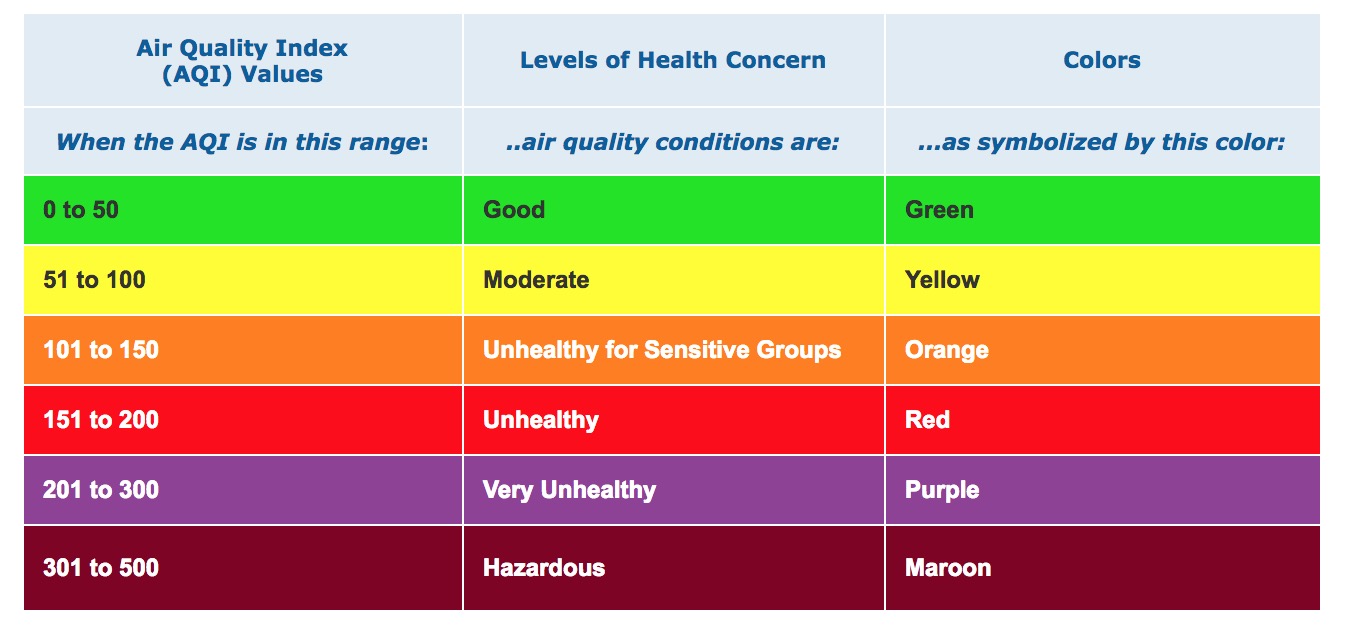
The Clean Air Partnership encourages area residents to check the daily, color-coded air quality forecast at CleanAir-StLouis and sign up for EnviroFlash alerts by email or text. Forecasts are also available on AirNow.gov, through First Alert 4 weather broadcasts and at FirstAlert4.com. Additional air quality tips, seasonal updates and helpful resources can be found at CleanAir-StLouis.com, or by following the Clean Air Partnership on Facebook or on X @gatewaycleanair.

To access the full American Lung Association 2026 “State of the Air” report, visit Lung.org.