Spotlight On: Hunter Engineering Company

Based in Bridgeton, Mo., Hunter Engineering Company is the world leader in alignment, wheel and tire service, inspection and ADAS calibration equipment. Hunter has offered 75+ years of designing and building automotive service equipment and is a certified veteran-owned business. With sustainability and environmental stewardship at the core of their culture, the company created the Hunter Green Team, which is an employee-led sustainability program that encourages team members across all sites and departments to introduce ideas to enhance sustainability, and their good work doesn’t stop there. 

Hunter is the only company in St. Louis Green Business Challenge history to successfully complete three different achievement levels in three consecutive years (2016-2018). Last year, Hunter Engineering received its third esteemed title of Challenge Champion for completing work with the Leader scorecard and committing to continued implementation of deeper sustainability strategies. 

“2022 was an exciting year of sustainability initiatives at Hunter Engineering Company, including proactive upgrades to our facilities and enhancements within our recycling program,” said Chip Hiemenz, Vice President of Hunter Engineering. “The St. Louis Green Business Challenge provides us with guidance and support to be a more sustainable company, resulting in economic, social and environmental benefits.” 

During the 2022 Challenge, Hunter Engineering replaced over 400 fluorescent, incandescent and HID lighting fixtures with high-efficiency LED fixtures, saving an average of 80 watts per fixture and amassing nearly 35,000 total watts of energy savings. The company also created HVAC schedules to reduce energy usage by 15% utilizing a programmable thermostat, added two extra electronics recycling stations, which collected 10,251 pounds of e-waste last year alone, and continued to enforce a “no-idling” policy for vehicles loading and unloading at their shipping docks to help reduce excess carbon emissions. 

To further reduce environmental impact, Hunter installed a solar energy system generating up to 1 kWh of power in their IT server room and three-layered panels in the building clerestory, doubling insulation R-value of previous panels, and also installed occupancy sensors and created lighting schedules for common areas.  

Other impressive initiatives that earned Hunter Engineering recognition in the Challenge include the construction of rainwater retention systems to mitigate hard surface run-off. In doing so, Hunter now controls peak flow rates of water which fights against property damage and helps remove pollutants. Additionally, the company converted to use of Earth Wise Kraft Napkins to replace a less sustainable alternative and implemented Green Seal certified Diversey J-Fill® Stations for dispensing chemicals. 

To learn more about the sustainable work underway by Hunter Engineering and ways your company can get involved in the St. Louis Green Business Challenge, subscribe to their weekly E-Newsletter or visit stlouisgreenchallenge.com. To learn more about the link between sustainability and air quality, explore our website, like us on Facebook or follow us on Twitter at @gatewaycleanair.

Climate Change Making It Harder to Breathe and Clean Up Ozone Air Pollution

Scientific research done in recent years has added to the evidence that a changing climate is making it harder to protect human health. These health impacts are a concern for the future, but are also evident right now, as rising global temperatures and disruption of short- and long-term weather continue to play a significant role in making the number of unhealthy ozone days higher than it would otherwise be.

According to the American Lung Association’s latest “State of the Air” report, the three years covered by the report (2019-2021) ranked among the seven hottest years on record globally. High ozone days and spikes in particle pollution related to heat, drought and wildfires are putting millions at risk and adding challenges to the work that states and cities are doing across the nation to clean up air pollution. They are also increasing the severity of pollution, resulting in a sharp rise in the number of days when the air quality poses an elevated risk of negative health effects. More than 30% of the nation’s population is exposed to high levels of ozone on enough days to earn the air they breathe a failing grade.

We just have to look at air quality in recent weeks to see firsthand the impact of wildfires alone, with smoke from the Canadian wildfires causing some of the worst air quality ever in New York and other U.S. cities, and also negatively impacting the air quality right here in the St. Louis region several days this summer.

While anyone who spends time outdoors where ozone pollution levels are high may be in danger, some people face a higher-than-average risk because of their underlying health and other characteristics. These populations include pregnant people and fetuses, children, anyone 65 and older, people with existing lung diseases such as asthma and COPD, and those who work or exercise outdoors.

To help keep these individuals and other St. Louisans informed about ozone pollution levels in the region and how those levels can affect their health, the Clean Air Partnership releases color-coded, daily air quality forecasts all summer long to let area residents know what the next day’s air quality is forecast to be and if they should alter their outdoor activities to minimize exposure to polluted air. This is especially important on orange or red ozone action days, which we’ve seen an excess of this season.

For more information and a host of additional tips to beat the summer heat to help clear the air and protect human health, visit cleanair-stlouis.com, like the Clean Air Partnership on Facebook or follow @gatewaycleanair on Twitter.

Spotlight On: Bethesda Health Group

Bethesda Health Group is a nonprofit, St. Louis-based senior living, care, and service organization providing a continuum of residential and care options for area seniors and their families for over 130 years. With an added commitment to sustainability, the company’s noteworthy green advancements are having a positive effect on the environment and helping clear the air in St. Louis region. 

Bethesda Health Group has been an active participant in the St. Louis Green Business Challenge since 2013. Last year, the Bethesda facilities team focused on continuing energy-efficient upgrades to equipment throughout the organization as a best practice for scheduled and necessary replacements. As a result, the company earned the esteemed title of Challenge Champion for completing work with the Leader scorecard and committing to continued implementation of deeper sustainability strategies.  

“Investments included hot water boilers, apartment heating and cooling equipment, window replacements, LED lighting in our apartments, and a cooling tower,” said Joseph J. Brinker, President and Chief Executive Officer of Bethesda Health Group. “I continue to be very proud that our entire organization has embraced the need for prioritizing energy efficient practices, and that we have continued to implement this strategy so effectively.” 

During the 2022 Challenge, Bethesda Health replaced over 30 HVAC units across its facilities with more energy efficient units. Additionally, the company upgraded its Delta Building Control Software so that equipment uses less energy, installed new hot water boilers with more energy efficient units at the Southgate and Meadow locations, upgraded water heaters to increase efficiency at the Orchard location, and upgraded the dining room heat pump and installed a new and more efficient cooling tower at the Barclay House location.  

Furthermore, Bethesda Health Group continued upgrades to LED lighting in apartments, coupling energy efficiency investments throughout all buildings with scheduled apartment renovations, and opted for a company-wide upgrade of holiday lights to LED lights. Doing so provides many environmental advantages since LED lights are up to 80% more energy efficient than fluorescent and incandescent lights and produce zero toxic elements. The company also continued replacement of windows and glass to use less energy for heating and cooling at their Orchard location, in addition to caulking the building exterior to reduce air infiltration. 

The Clean Air Partnership is pleased to recognize the efforts of businesses such as Bethesda Health that continue to take action for cleaner air by channeling their time and energy towards practicing sustainability. For more information on how your company can get involved in the St. Louis Green Business Challenge, subscribe to their weekly E-Newsletter or visit stlouisgreenchallenge.com. To learn more about the link between sustainability and air quality, explore our website, like us on Facebook or follow us on Twitter at @gatewaycleanair.
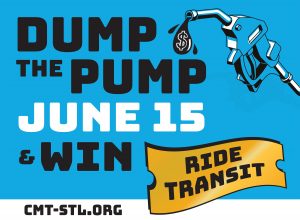
Commuters Encouraged to “Dump the Pump” on June 15 for Opportunity to Win Prizes

Campaign Reinforces the Benefits of Taking Transit and Incentivizes People to Give it a Try

Public transit is the region’s “golden ticket” to a safe, more cost-effective and hassle-free way for St. Louis area residents to get where they need to go. To help reinforce this message, Citizens for Modern Transit (CMT), Metro Transit and St. Clair County Transit District (SCCTD) are encouraging area commuters to give transit a try on Thursday, June 15, which is National Dump the Pump Day. Those who take transit that day will witness the benefits of this viable commuting option and be eligible to win prizes. With transportation-related emissions being one of the biggest contributors to air pollution, taking public transportation is also a great way to reduce harmful auto emissions to help keep the air quality in healthy ranges.

Nearly 100 branded envelopes touting “Dump the Pump to Win. Public Transit is your Golden Ticket.” will be hidden on MetroLink, MetroBuses, Metro Call-A-Ride and SCCTD’s Flyer Service vehicles, as well as at Metro Transit Centers on both sides of the river. Each will have a prize enclosed, as well as information about the many benefits of taking transit and the availability of CMT’s Try & Ride Program, which provides new riders, who are unfamiliar with the transit system, with complimentary transit tickets for one month, giving riders time to get on board and learn the system. Those who find a “Golden Ticket” inside an envelope will have captured one of the grand prizes, including a $100 gift card to Amazon, one year’s worth of free transit, four St. Louis Riverboat Cruise tickets, and two tickets to the St. Louis Cardinals game against the Washington Nationals on July 15. Other prizes range from free daily and monthly fare passes to gift cards to establishments accessible via the MetroLink system.

Transit ambassadors will also be at the Shrewsbury-Lansdowne I-44, Clayton, Brentwood I-64, Maplewood, Belleville, Fairview Heights and Emerson Park Transit Centers from 7 to 8:30 a.m. on June 15 handing out PAYDAY candy bars with a QR code that allows commuters to calculate the cost savings associated with taking public transit.

“Gas, parking prices, vehicle maintenance and car insurance are costly,” commented Kimberly Cella, executive director of Citizen for Modern Transit. “According to the American Public Transit Association, a two-person household can save as much as $10,000 annually by downsizing to one car and using public transit. This campaign is designed to help St. Louisans better understand these and the many other benefits of public transit and its ability to get them where they need to go. Transit can be your own personal payday each day.”

To learn more, visit www.CMT-STL.org. For more information on the link between sustainable transportation and air quality, visit the Clean Air Partnership’s website at www.CleanAir-StLouis.com.

High Ozone Concentrations Result in Early Surge of Poor Air Quality Days in the St. Louis Region

Coming on the heels of Memorial Day weekend and the unofficial start of summer, the bi-state St. Louis region has experienced a string of poor air quality days and record-setting temperatures this week, with more 90°+ days on the horizon. Having already experienced more “orange” days earlier in the ozone season than in years past, the importance of keeping the region’s air clean is at an all-time high as weather conditions continue to play a significant role in our region’s daily air quality.

Ozone is created when heat and sunlight react with nitrogen oxides and volatile organic compounds (VOCs) that are emitted from motor vehicles, industrial facilities, gasoline vapors, chemical solvents and dozens of other sources. Ozone gas is a powerful lung irritant that reacts with the delicate lining of the airways once inhaled, causing inflammation and other damage that can impact multiple body systems.

“When ozone levels are high, many people experience breathing problems that can be felt right away,” said Susannah Fuchs, Director of Clean Air for the American Lung Association in Missouri. “Very simply put, it’s kind of like a sunburn on your lungs.”

Immediate problems include shortness of breath, wheezing and coughing, asthma attacks, increased risk of respiratory infections, increased susceptibility to pulmonary inflammation, and increased need for people with lung diseases like asthma or chronic obstructive pulmonary disease (COPD), to receive medical treatment or go to the hospital. Studies also show that long-term exposure to ozone pollution may increase the risk of premature death, even in some cases for healthy young adults.

With that in mind, there are a number of things individuals can do to minimize exposure to ozone pollution to help them breathe easier. The Clean Air Partnership releases daily air quality forecasts to let residents know what the air quality will be during the prime of summer. Signing up to receive the color-coded forecast at CleanAir-StLouis.com helps to ensure St. Louisans know what the next day’s air quality is forecast to be and if they should take precaution by altering their outdoor activities to avoid being exposed to polluted air, particularly on orange or red “ozone action days.” These warnings are especially important for sensitive populations, including children and teens, anyone 65 or older, people who work or exercise outdoors, and those with existing lung or cardiovascular diseases.

Additionally, given that transportation-related emissions have always been one of the biggest contributors to air pollution, the Partnership encourages locals to take action for cleaner air by choosing not to idle your vehicles, avoiding topping off your gas tank, telecommuting, and combining errands into a single trip. Carpooling, ridesharing and taking transit can also greatly impact the amount of ozone-forming emissions on any given day and improve lung health overall.

To access a wealth of information and additional tips to help clear the air and protect human health during the peak of ozone season, visit the Clean Air Partnership’s website, like us on Facebook or follow @gatewaycleanair on Twitter.


Spotlight On: The City of Highland

Located just 35 miles east of St. Louis and home to nearly 10,000 residents, the City of Highland has a long history of being a progressive municipality, successfully blending industry within a small-town atmosphere. As the Clean Air Partnership continues to spotlight local municipalities utilizing innovative approaches to create cleaner, greener environments for their constituents, we’re pleased to recognize Highland’s ongoing commitment to sustainability that helps shape city operations and future planning.

Highland was a proud participant of the 2021 St. Louis Green Cities Challenge alongside other participating municipalities that addressed sustainability within the range of operational requirements unique to their local governments. As part of the Challenge, the city incorporated a sustainability policy and practiced fundamentals, including addressing measures defined by OneSTL, the regional plan for sustainable development. At the focus of their sustainability goals was the conservation of Silver Lake, which serves as the lifeline to the future for their community.

“Completed in 1962 as a result of the 1954 drought, Highland is grateful to our past city leadership that had the forethought to see Silver Lake become a lasting water supply for future generations,” said Mark Rosen, Director of Highland Parks and Recreation.

In partnership with Heartlands Conservancy, Highland was awarded a Section 319 grant to utilize Nonpoint Source Management Program funds to implement best management practices from the Highland Silver Lake Watershed Plan, developed by HDR Engineering in 2011. The city maximized the use of funds to significantly reduce pollutants entering Silver Lake, ultimately decreasing 2,794 pounds of phosphate per year, 5,211 pounds of nitrogen per year, 3,132 tons less sediment per year. This also proves to be a positive for the region’s air quality!

Additional green improvements were made in the community, including the construction of a wetland restoration site and removal of a minimum of five acres of invasive plant species, which can negatively impact climate change mitigation efforts. The city also constructed a one-acre retention pond adjacent to the wetland to trap sediment, while doubling as a fish-rearing pond where fish are raised before being released into Silver Lake. Moreover, the city reconstructed a local peninsula with rip-rap – a range of rocky material placed along shoreline structures to protect from scour and erosion – to aid during large storm events and provide a number of water quality benefits.

For additional information on the sustainable efforts underway by the City of Highland and how your organization or municipality can get involved in the Challenge, subscribe to their weekly E-Newsletter or visit stlouisgreenchallenge.com. To learn more about the link between sustainability and air quality, explore the Clean Air Partnership’s website, like us on Facebook or follow us on Twitter at @gatewaycleanair.

Spotlight On: RBO

Based in Maryland Heights, RBO – formerly known as RBO PrintLogistix – is an established marketing execution company that helps brands become leaders in their industries through a mix of solutions that include creative services, brand controls, brand fulfillment and metrics. Veteran-owned and woman-led, these four pillars are the foundation of RBO’s holistic approach to elevating brand identities and relieving the burden faced by today’s busy marketing professionals. With an added specialty in sustainability, the company’s noteworthy green achievements and innovations are having a positive effect on the environment and helping clear the air in St. Louis the region.

With seven years of continued sponsorship of the St. Louis Green Business Challenge under the company’s belt, RBO was pleased to participate in their 2021 Challenge, where they earned the esteemed title of Challenge Champion for completing work with the Leader scorecard and committing to continued implementation of deeper sustainability strategies.

During the Challenge, RBO adopted a digital project workflow to dramatically reduce the amount of desktop printouts. “We are implementing additional technology that will reduce paper waste and our dependency on natural resources,” said Stacey Elliot, Director of Human Resources at RBO. To further conserve energy, RBO’s new power management solution allowed clients to measure, manage and monitor their organization’s desktop and mobile computers, reducing energy costs by as much as 30%.

Additionally, RBO implemented a permanent hybrid work policy, allowing employees to work from home multiple times a week on a regular basis. The flexibility telecommuting provides not only helps to reduce the need for transportation to-and-from work, cutting down on harmful carbon emissions, but also minimizes company reliance on non-renewable resources, which is a win for our air quality!

Another impressive initiative that earned RBO recognition in the Challenge was hosting an E-waste recycling event during summer, which allowed individuals to properly dispose of their electronic devices to avoid them taking up space in hazardous landfills that pollute the atmosphere. RBO also sourced personal protection equipment (PPE) for health care workers, first responders and business clients to ensure their safety needs were met in the midst of the global COVID-19 pandemic.

The Clean Air Partnership is delighted to recognize the efforts of businesses such as RBO that continue to take action for cleaner air by channeling their time and energy towards practicing sustainability. For additional information on how your company can get involved in the St. Louis Green Business Challenge, subscribe to their weekly E-Newsletter or visit stlouisgreenchallenge.com. To learn more about the link between sustainability and air quality, explore our website, like us on Facebook or follow us on Twitter at @gatewaycleanair.

’Tis the Season for Sustainability: A Guide to Greening Holiday Celebrations

The next wave of holidays is quickly approaching, and although we recognize this to be the most wonderful time of year, it’s also considered the most wasteful. Between Thanksgiving and New Year’s alone, waste production jumps 25%, adding an extra one million tons of waste to landfills each week.

While these are some alarming numbers, there’s much that can be done to combat excess waste and celebrate a sustainable holiday. The more people that work to save energy and resources during this season, the bigger the impact that can be made. As you get into the festive spirit these next few weeks, here are some tips to make going green a new treasured holiday tradition:

  • Gift Greener – Consider gifting an experience to loved ones to reduce waste and environmental impact. Buying gifts from local businesses that follow social and environmental practices or supporting local artists, craftspeople or farmers will also largely benefit the region’s air quality. Additionally, newspapers, old posters, maps, reusable gift bags or scrap fabric lying around the house make for beautiful, personal and unique gift wraps. If you choose to buy gift wrap, look for recycled content gift wrap paper whenever you can find it.
  • Light it Right – Traditional incandescent strands use approximately 80% more energy and are far less reliable than their LED counterparts. While LEDs may be a little more expensive, they last up to 10 times longer and will ultimately save you money on your electric bill, too. Rather than keeping your house lit up 24/7, consider connecting lights to a timer so they only turn on during certain evening hours to further conserve energy.
  • Think Globally. Buy Locally. – Whether you’re heading to the mall or local family-owned shop for last minute gift shopping, remember the less you have to drive, the better for the environment. Every gallon of gas saved keeps 20 pounds of carbon dioxide out of the atmosphere, and not driving store-to-store will help to reduce harmful auto emissions that lead to poor air quality. Also, if you’re planning to host a festive holiday feast this year, consider shopping for sustainable produce from your local farmers. Not only does local organic food taste better, but you’ll also be doing your part for the community and the planet.
  • Travel Sustainably – Greener travel starts before even leaving the house. The more weight trains, planes, and automobiles have to carry, the more fuel they use, and the more harmful greenhouse gases are emitted into the atmosphere. So, be conscious of how many extra items overall you are packing to lighten the load and help keep the air quality in healthy ranges. If you’re traveling to visit family by your own personal vehicle, routine maintenance steps like checking engine performance and keeping tires properly inflated are ideal ways to help reduce emissions and fuel consumption. Traveling by bus or train are also great options that can offer a certain level of convenience, particularly if the weather and roads are bad along your route

A few small changes are all it takes to help people all across the St. Louis region breathe easier this holiday season. To learn more, visit the tips section of the Clean Air Partnership’s website, like us on Facebook or follow us on Twitter at @gatewaycleanair.
Celebrate America Recycles Day Today and Every Day

Every year on November 15th, individuals and businesses all across the country join forces to celebrate America Recycles Day. This national holiday is dedicated to educating people about the importance of recycling to our economy and environmental well-being, as well as helping motivate occasional recyclers to make it an everyday habit and commit to purchasing recycled products.

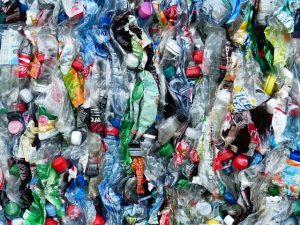
In 2018 – the last time the Environmental Protection Agency (EPA) analyzed where the nation’s trash ends up – the plastics recycling rate came in at about 9%, meaning that more than 91% of plastics generated that year were put in a landfill or incinerated for energy. A new report from Beyond Plastics and the Last Beach Cleanup indicates that the rate in 2021 was presumably under 5%, cutting the previous estimate nearly in half. One key reason for the drop is that the U.S. has recently struggled to offload its plastic trash to other countries. Therefore, more plastic waste with fewer places for it to go means that a greater share is now ending up in landfills and polluting the air.

To help do our part in the St. Louis region, the Clean Air Partnership encourages area residents to be proactive in making simple, positive lifestyle changes toward bettering our environment and the quality of the air we breathe. With that in mind, here are some helpful tips to consider for incorporating greener recycling habits into your day-to-day routine:

  • Forget plastic; think reusable – Americans use more than 100 million plastic bags a year. Consider opting for reusable bags for future shopping trips – that way you’re not only reducing the amount of non-renewable resources necessary to produce plastic bags, but also helping to clean the air by cutting down on the thousands of bags that end up in landfills and don’t fully decompose. The same goes for plastic water bottles – purchase a refillable bottle instead of throwing away a new one each time to cut down on unnecessary waste. You can go one step greener by replacing plastic straws and using paper or reusable metal straws, too.
  • Avoid wish cycling – While it stems from the best intentions, wish cycling is the practice of recycling items that cannot be recycled. The items that people wish cycle are usually things you would expect can be recycled, which emphasizes the importance of understanding recycling guidelines in your area to ensure that anything you sort and place in your curbside container with the goal of it being sent to your local recycling center actually makes it there. Cardboard takeout containers, pizza boxes and disposable tupperware items with greasy residue or stuck-on food are popular wish cycling items that are no good as they contaminate other materials that could have been recycled.
  • Repurpose old items – It’s also worth mentioning that a major portion of our waste can be reduced or reused before even resorting to recycling. Shopping at or donating to secondhand stores are great ways to prevent unwanted items from ending up in the landfill. Additionally, with the holidays coming up, using recyclable materials around the house like old fabric, maps, newspapers or magazines for gift wrap are also easy ways to significantly reduce waste.

You can do your share for cleaner air and further commit to living a recycled lifestyle by taking the #BeRecycled pledge at americarecyclesday.org. For more great tips on how to achieve cleaner air year-round, visit our website, like us on Facebook or follow us on Twitter at @gatewaycleanair.
Assessing Air Quality Conditions in the St. Louis Region as the 2022 Forecasting Season Wraps Up

Air quality forecasting concluded at the end of last month, and the Clean Air Partnership is pleased to report that, as we reflect on this season, ozone air pollution levels remained consistent with those of the prior year. The 2022 forecasting season began with encouraging news that the St. Louis region had once again escaped being ranked among the top 25 most-polluted cities, though we still struggle with unfavorable air quality, as St. Louis ranked 37 in the nation overall for most ozone-polluted U.S. cities and recently failed to meet the U.S. Environmental Protection Agency’s (EPA) latest ozone standards.

However, a look back over the past several months reveals that our air quality remained relatively healthy during the peak ozone season. From the beginning of May through Sept. 30, green was the dominant color with 80 days where the air quality was good, followed by 69 yellow or moderate air quality days, and four unhealthy orange days for sensitive populations, including children, older adults, people who work or exercise outdoors, and those with existing lung disease or cardiovascular disease.  The data also revealed no poor or red air quality days occurred.

This year, the Clean Air Partnership worked collaboratively with Citizens for Modern Transit (CMT) and other partnering organizations to inform people the way they choose to travel impacts the quality of air area residents breathe, while motivating them to modify commuting behaviors as often as they are able during the summerlong “Don’t Pollute. Switch Up Your Commute,” campaign. Hundreds of St. Louisans signed up to receive daily air quality forecasts to stay informed about ozone pollution levels in the region and how those levels can affect their health, and even though the forecasting season has come to an end, area residents can still visit SwitchUpYourCommute.com to access a wealth of information on the wide array of alternative transportation options available on both sides of the Mississippi River, associated schedules, pricing, programs, ride matching services and incentives.

Additionally, there are many other eco-friendly lifestyle changes unrelated to commuting that individuals, businesses and municipalities can consider any time of year to positively impact air quality and improve lung health in their communities. These changes include efforts to conserve energy, recycle, reduce waste and reuse items, all of which can be found and more at CleanAir-StLouis.com.

Air quality forecasting will resume in May 2023. In the meantime, individuals can get a head start by signing up here to receive the daily forecast in their email inboxes or via text message from the EPA’s AirNow EnviroFlash air quality alert system. We thank you for your continued efforts to help keep our air quality in healthy ranges and look forward to re-engaging with you next year!