
Giving Thanks for Cleaner Air

With Thanksgiving fast approaching, it’s a special time to come together with family and friends for a delicious meal and reflect on the many things to be grateful for. Unfortunately, this time of thankfulness tends to also become a time of wastefulness, as studies show that people living in America produce 25% more waste during the holiday season between Thanksgiving and New Year’s. 

As we plan out all the dishes that will be on our tables this year, it’s important to consider the impact that certain holiday traditions have on the planet and commit to greening dining festivities. That’s something for which everyone can be thankful, but it’s particularly meaningful for children, older adults and those who suffer from lung diseases that make them especially vulnerable to poor air quality. 

Start by sourcing as many of your ingredients as possible locally to help reduce emissions produced by transport trucks. The less your produce has to travel, the less waste is produced, and the smaller the environmental impact. With so many loved ones gathered at the table for Thanksgiving dinner, it’s also not uncommon for regular plates, cups, napkins and silverware to be swapped out for disposables. Instead of buying tableware for one-time use, opt for your favorite set of dishes this year since small changes can lead to a much bigger effect, helping to keep the region’s air quality in healthier ranges. 

With the holiday season also comes the spending season, where so many take advantage of can’t-miss deals this time of year. For those who want to shop but avoid the lines, Cyber Monday offers all the benefits of Black Friday shopping but from the comfort and convenience of your home, creating a stress-free experience that helps reduce environmental impact and improve air quality. Keep in mind that consolidating your online orders to one store also eliminates the need for excess packaging. Moreover, if you’re planning to purchase any electronics or appliances, go for the best green alternatives by checking for the ENERGY STAR® mark. ENERGY STAR-certified products use less energy than standard models, ultimately saving money on utility bills while helping to protect the environment and clear the air. You can also make sustainable purchase decisions by choosing products made from eco-friendly materials, such as organic cotton or recycled plastic, or buying an experience to gift. 

This Thanksgiving, when counting life’s blessings and listing those things to be grateful for, don’t forget to add clean air to the list. And thank you for all you do so we can all breathe easier. To learn more, visit our website tips section at www.cleanair-stlouis.com, like the Clean Air Partnership on Facebook or follow us on Twitter at @gatewaycleanair. 

Spotlight On: MTM, Inc.

Headquartered in Lake Saint Louis, Mo., MTM is a medical and transportation management company whose mission is to partner with clients in developing innovative solutions for accessing healthcare, increasing independence, and connecting community resources in the most cost-effective manner. MTM demonstrates a strong commitment to sustainability and actively takes steps to reduce its carbon footprint and make a positive impact in the community. Last year, MTM earned the esteemed title of St. Louis Green Business Challenge Champion for completing work with the Leader scorecard and committing to continued implementation of deeper sustainability strategies.

“At MTM, initiatives related to sustainability and protecting our environment are the threads weaving our existence,” said Alaina Maciá, President and CEO of MTM. “We think carefully about our approach to sustainability, and we are proud to lead the transportation industry in mitigating the impacts of climate change through more sustainable transportation solutions. We have a long way to go, but we’re taking significant steps to reduce our carbon footprint and make a positive impact on our industry, and our Earth as a whole, as we seek to make transportation more sustainable for future generations.”

During the 2022 Challenge, MTM implemented a new transit per diem incentivizing staff to utilize public transportation or rideshare services as an alternative to car rental while traveling for business, which helps to reduce the number of vehicles on the road and largely benefits air quality. As an added bonus, the company offered a travel training program with partners like Metro Transit in St. Louis and other U.S. public transit agencies to educate riders on using these public services safely and effectively. MTM also conducted a social media and internal campaign to gain valuable insight on what employees love most about telecommuting and how it supports sustainability efforts.

Other noteworthy accomplishments include an update to the headquarters roof with a heat-reflecting, white silicone coating and installation of a higher efficiency air conditioning system. To further reduce waste and environmental impact, MTM introduced water bottle filling stations and provided employees with glass water bottles and reusable coffee mugs. Several staff members committed to practicing sustainability outside the workplace as well by participating in Earth Month activities and plastic-free challenges, eating more vegan meals, completing at-home energy and waste audits and more.

The Clean Air Partnership is pleased to recognize the efforts of businesses such as MTM, Inc. that continue to take action for cleaner air by channeling their time and energy towards practicing sustainability. For more information on the sustainable efforts underway by MTM and how your organization or municipality can get involved in the Challenge, subscribe to the bi-monthly E-Newsletter or visit stlouisgreenchallenge.com. To learn more about the link between sustainability and air quality, explore the Clean Air Partnership’s website, like us on Facebook or follow us on Twitter at @gatewaycleanair.
Spotlight On: The Village of Glen Carbon

As the Clean Air Partnership continues to spotlight local municipalities utilizing innovative approaches to create environments with cleaner air and educate their residents on the importance of leading a greener lifestyle, this month we’re pleased to recognize the great work underway by the Village of Glen Carbon.

Located just 14 miles northeast of the City of St. Louis and home to nearly 14,000 residents, Glen Carbon continues to pursue various strategies to be a more sustainable community and uphold their rich tradition of being a great place to live, work and play. In 2022, the Village received the Award of Achievement in the Green Cities Challenge, where participants advance their green efforts by implementing a sustainability policy and practicing fundamentals, including addressing measures defined by OneSTL, the regional plan for sustainable development.

“The Green Cities Challenge has provided us with the opportunity and resources to enhance the environment and quality of life for the residents of Glen Carbon,” said John Slosar and Chris Krusa, co-chairs of the Glen Carbon Cool Cities Committee. “We are grateful to the organizers and co-participants in the Challenge for their help in making Glen Carbon a greener and healthier place to live.”

Among the many accomplishments that helped earn Glen Carbon recognition in the 2022 St. Louis Green Cities Challenge is the expansion of its community garden and Mayor Marcus’ Tree Giveaway that distributed 500 conservation-grade, bare-root native species trees to Glen Carbon residents and local elementary schools. The Village also received a Trees Forever grant to plant 14 new native trees in area parks, which significantly benefits outdoor air quality by releasing oxygen into the atmosphere.

Moreover, Glen Carbon worked to develop an ordinance requiring electric vehicle (EV) charging stations that not only help to reduce the dependency on fossil fuels but also reduce harmful carbon emissions. The Village’s five-person Cool Cities Committee meets once a month and promotes city-specific action plans such as this that are designed to reduce global warming pollution and improve quality of life for residents and the planet. Additionally, the Village began investigating the possibility of a prairie restoration at Greenspace East, which covers 80 acres between Old Troy Road and Route 159 with 9,500 feet of asphalt trails designed for air quality-friendly activities like walking, hiking and jogging.

For more information on the sustainable efforts underway by the Village of Glen Carbon and how your municipality can get involved in the Challenge, subscribe to the bi-monthly E-Newsletter or visit stlouisgreenchallenge.com. To learn more about the link between sustainability and air quality, explore the Clean Air Partnership’s website, like us on Facebook or follow us on Twitter at @gatewaycleanair.
Reflecting on the 2023 Air Quality Forecasting Season

Air quality forecasting was extended through the mid-point of this month after an abnormal summer. While the season began with news that the St. Louis region had once again escaped being ranked among the top 25 most-polluted U.S. cities, it’s still clear we struggle with unfavorable air quality here in the bi-state area. Despite the fact that air quality may not be top of mind when the temperature outside cools down and ozone pollution levels in the region drop, it remains extremely important to continue the fight for cleaner air all year-round.

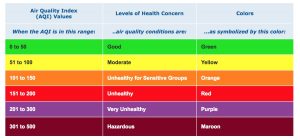
A look back over the past several months reveals that our air quality took a hit earlier in the forecasting season than usual as we experienced a record-breaking heat wave with temperatures exceeding 100 degrees and the heat index topping 110+ degrees for six days in a row. That now ties the second-longest streak of extreme temperatures in the region’s history. Additionally, high ozone days and spikes in particle pollution due to Canadian wildfire smoke that caused some of the worst air quality ever in New York and other U.S. cities also negatively impacted St. Louis’ air quality several days this summer. These factors largely contributed to the 14 orange air quality days and singular red day in the region where conditions were unhealthy for sensitive populations, including children, older adults, people who work or exercise outdoors, and those with existing lung disease or cardiovascular disease.

From the beginning of May through Oct. 15, green was the dominant color with 77 days where the air quality was good, followed by 76 yellow or moderate air quality days. While this is positive news overall for the region, there is still much work to be done in the long-term quest for cleaner air to protect our local communities from the growing risks to public health resulting from increased levels of ozone and particle pollution. The Clean Air Partnership encourages area residents to remain steadfast in their efforts to take voluntary steps to reduce ozone-forming emissions 365 days a year, such as taking transit, carpooling, telecommuting, avoiding vehicle idling, not topping off your gas tank and combining errands into a single trip. Together, we can continue to make great strides in improving the quality of the air we all breathe!

Air quality forecasting will resume in May 2024. In advance of that, individuals can sign up to receive the color-coded daily forecasts if they are not already getting them via their email inboxes or text through the Environmental Protection Agency’s EnviroFlash air quality alert system at CleanAir-StLouis.com.

To learn more about the health effects of poor air quality and tips for doing your share for cleaner air, visit the Clean Air Partnership’s website, like us on Facebook or follow @gatewaycleanair on Twitter.

Spotlight On: Missouri Botanical Garden

Founded in 1859, the Missouri Botanical Garden is the nation’s oldest botanical garden in continuous operation and a National Historic Landmark. Serving as a center for botanical research and science education, as well as an oasis in the city of St. Louis, the Garden seeks to inspire and educate area residents about the benefits of being good environmental stewards through responsible and sustainable use of natural resources. The Clean Air Partnership is pleased to shine a spotlight on the Missouri Botanical Garden for its noteworthy green achievements and innovations that are having a positive effect on the environment and helping clear the air in the region. 

During the 2022 St. Louis Green Business Challenge, the Garden earned the esteemed title of Challenge Champion for completing work with the Leader scorecard and committing to continued implementation of deeper sustainability strategies. The Garden also elected to develop and report on their Champion Innovation Project – Jack C. Taylor Visitor Center Showcases Sustainability and Biophilic Design. 

“Missouri Botanical Garden is proud to focus on the Jack C. Taylor Visitor Center as our Champion Innovation Project,” said Glenda Abney, Vice President of Sustainability for the Missouri Botanical Garden. “Years in planning, this gracious new doorway and welcome to the Garden was supported by over $100 million in private donations. The building and grounds embody the Garden’s commitment to sustainability through accessibility, design and presentation and operations.” 

As part of this project, Missouri Botanical Garden optimized their building envelope and mechanical systems to ensure comfort while reducing annual energy costs by 23% from standard technologies. The Garden installed a 220-kWh solar array rooftop in addition to six, free EV charging stations with 10 chargers to promote the use of alternative transportation modes other than gasoline-powered cars. The Garden also implemented new digital displays and electronic ticketing within the new visitor center to reduce the waste of print materials, fulfilling grant requests and internal conservation goals.  

To further reduce environmental impact, the Garden introduced underground cisterns holding 50,000 gallons of rainwater for filtration and sanitization, eliminating municipal-source water treatments for building plant irrigation, as well as low flush and low flow fixtures to reduce building potable water demand by 32%. As a result, indoor and outdoor water management is expected to meet 86% of total site demand, saving an annual average of 679,392 gallons of municipal water use. Additionally, the Garden has planted some 30,000 new specimens and continued the practice of rainscaping plantings, allowing for them to retain 30,000 additional gallons of stormwater on-site. 

For more information on the Missouri Botanical Garden and how your company can get involved in the St. Louis Green Business Challenge, subscribe to their weekly E-Newsletter or visit www.stlouisgreenchallenge.com. To learn more about the link between sustainability and air quality, explore our website, like us on Facebook or follow us on Twitter at @gatewaycleanair.
Spotlight On: The City of Edwardsville

As the Clean Air Partnership continues to spotlight local municipalities utilizing innovative approaches to create cleaner, greener environments where constituents can live, work and learn, this month we’re pleased to recognize the City of Edwardsville for their long-term commitment to sustainability that shapes city operations and future planning. 

Located just 20 miles outside of the City St. Louis and home to nearly 27,000 residents, Edwardsville has rolled out a number of programs and resources to improve sustainability. For example, the city’s Single-Use Bag Fee Ordinance requires a 10 cent per bag fee for disposable plastic and paper checkout bags at all retail businesses greater than 7,000 square feet to help reduce waste and build a more sustainable community. Since plastic bags are produced from non-renewable resources that are non-biodegradable and difficult to recycle, they often end up as litter in the community and natural environment. And while paper bags are recyclable, they take large amounts of water and energy to produce.  

Additional green improvements that helped earn Edwardsville recognition in the 2022 St. Louis Green Cities Challenge included the construction of a new, environmentally efficient fire station in the heart of the city’s growing eastern corridor. The station features solar panels to offset electricity costs and emissions released into the atmosphere, radiant floor heating to more efficiently and quickly warm bays and dry wet equipment, and bi-fold bay doors that open and close in about a third of the time to speed up emergency egress and limit building heat loss.  

“It is important for every community to pursue sustainability, but as the County Seat, the home of the largest university in the St. Louis region, and the nexus of a growing bicycle pedestrian movement, Edwardsville is uniquely positioned to be a leader in reducing energy consumption, harmful vehicle emissions, and single use waste, while transitioning to more sustainable practices,” said SJ Morrison, 4th Ward Alderman for the City of Edwardsville. 

Moreover, the Good Dirt Community Garden completed its first growing season at Meyer YMCA where community members grew their own vegetables and learned about the importance of composting, which largely benefits air quality. The city also passed two green ordinances – one allowing EV charging stations in all zoning districts and guiding compost bin/pile placement on residential property and the other to ensure that new and redeveloped properties will install lights that do not illuminate above a horizontal plane to reduce light pollution. Lastly, the city held its first ever Trail Summit with Madison County Transit for community leaders to discuss where they want connections in their communities and approved a Bike and Pedestrian Master Plan to promote air quality-friendly ways to get around town. 

For more information on the sustainable efforts underway by the City of Edwardsville and how your municipality can get involved in the Challenge, subscribe to the bi-monthly E-Newsletter or visit stlouisgreenchallenge.com. To learn more about the link between sustainability and air quality, explore the Clean Air Partnership’swebsite, like us on Facebook or follow us on Twitter at @gatewaycleanair.
Take Action for a Waste-Free World and Cleaner Air in Celebration of World Cleanup Day

On Saturday, September 16th, World Cleanup Day will unite volunteers, governments and organizations in 197 countries and territories to tackle the universal mismanaged waste crisis and to help create a new, more sustainable world. A powerful “green wave” spanning across the globe will harness the power of millions of people taking positive action on the same day, bringing together the global community to raise awareness and implement true change to achieve a one shared goal – a clean and healthy planet. 

Wherever you are in the world, the actions you take for World Cleanup Day in your local community can have a huge impact. Grab a pair of gloves, a few trash bags and organize a cleanup event yourself if there are none close by. If you opt to go this route, invite family and friends to participate and register it as an event here, as every single person’s contribution to the activity counts toward the global total. 

Area residents inspired by World Cleanup Day are encouraged to further make a commitment to practice simple, waste-reducing habits moving forward in all aspects of daily life that are aimed at bettering our environment and the quality of the air we breathe. With that in mind, here are some helpful tips to consider for incorporating green into your day-to-day routine:  

  • Nix Bottled Water – Did you know that up to 80% of single-use water bottles in the U.S. never get recycled? Not only does the production of plastic water bottles contribute significant amounts of greenhouse gases to the atmosphere, but their litter lingers for years on end. Consider buying a reusable water bottle to take with you on the go and refill as needed to cut down on unnecessary waste and help improve air quality. 
  • Reduce Waste/Conserve Energy at Home – Swapping out incandescent light bulbs with LEDs, putting timers on lights and investing in smart power strips can help to avoid excessive electricity use. While reducing and reusing are the most effective ways to save money and natural resources, recycling is another vital piece of greening your home by helping to keep waste out of landfills and turning glass, paper, plastic and other items into new materials. Also, consider setting up recycling bins in your home and purchasing recycled products to help clean the air.

  • Go Paperless When Possible – There are many places where you can opt out of paper, whether that be credit card bills, receipts or even your favorite household cleaning products. Paper towels, for example, may be useful and convenient but collectively contribute to deforestation and an ever-increasing waste problem. Signing up for online banking, opting for email versions of receipts, printing on both sides of a sheet or using the back side of old documents for scrap paper are other resourceful ways to reduce paper waste.  

For more great tips on how to achieve cleaner air year-round, visit the Clean Air Partnership’s website, like us on Facebook or follow us on Twitter at @gatewaycleanair. 

Spotlight On: Madison County Building & Zoning

Based in Edwardsville, Ill., the Madison County Building & Zoning Department enables the County Board to plan and prioritize policies and programs related to land use and development for unincorporated areas. The Clean Air Partnership is pleased to recognize Madison County Building & Zoning Department’s air quality-friendly efforts that earned them the esteemed title of St. Louis Green Business Challenge Champion last year for completing work with the Leader scorecard and committing to continued implementation of deeper sustainability strategies. 

“The Green Business Challenge has once again been of great value to Madison County’s sustainability efforts, enhancing our ability to share ideas and collaborate with like-minded organizations,” said Brandon Banks, Resource Management Coordinator for Madison County Building & Zoning. “We continue to improve efforts in environmental education and stewardship, providing resources and building trust with the residents we serve. Working with Challenge partners, we are able to increase our impact in keeping our community strong and prosperous for future generations.” 

During the 2022 Challenge, Madison County Building & Zoning Department led two sustainable action initiatives – Madison County Green Schools Program and the Clean Communities program. The Green Schools Program worked directly with 41 schools and impacted nearly 25,000 students through recycling programs, county-wide competitions, professional development opportunities and educational resources. Additionally, the Clean Communities program focused on cleaning up litter in Madison County and successfully distributed over 1,600 resource kits to residents, each including a safety vest, litter grabber, gloves and trash bags. 

To further reduce environmental impact, Madison County Building & Zoning hosted four electronics collection events over the course of the year, serving more than 1,400 households, and recovering more than 120,000 lbs. of electronics for recycling that otherwise might have ended up in landfills and created harmful CO2 emissions. Through a partnership with Madison County Building & Zoning and the Illinois Environmental Protection Agency (IEPA), a newly established Household Hazardous Waste site in Wood River doubled the amount of toxic household chemicals collected last year, including paints, chemicals, batteries, and other hazardous materials that are harmful to the environment and air quality. Another collection event with the IEPA allowed residents of Venice Township, Olive Township and Foster Township to dispose of bulky items not accepted in their residential trash. 

Last but certainly not least, Madison County Building & Zoning awarded more than $142,000 in grant funds to 11 local government agencies for environmental projects, in addition to granting $21,343 to 12 Madison County schools. 

For more on how your organization can get involved in the Challenge, subscribe to their weekly E-Newsletter or visit stlouisgreenchallenge.com. To learn more about the link between sustainability and air quality, explore the Clean Air Partnership’s website, like us on Facebook or follow us on Twitter at @gatewaycleanair.

Beat the Heat and Stay Informed About Regional Ozone Levels with Air Quality Alerts

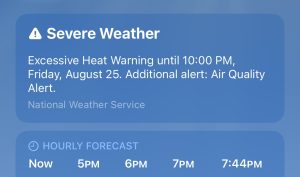
A dangerous wave of heat and humidity has made its way across the bi-state area this week with temperatures ranging from 95 to 100+ degrees each afternoon. Heat index values have topped 117, which marks the fourth highest heat index value ever recorded in the region. As a result, the National Weather Service has issued an excessive heat warning for the St. Louis metropolitan area through the end of the week, and likewise, an air quality alert has been in effect since Sunday. 

Area residents may have noticed these alerts appearing on their phone’s weather app every day this week due to the air quality index (AQI) exceeding values of 100. This new feature became available at the start of the air quality forecasting season to inform individuals about the quality of the air they’re breathing and the risks they face. 

“All dissemination services at our disposal receive these air quality alerts,” said Kevin Deitsch, Warning Coordination Meteorologist for the National Weather Service of St. Louis. “That was the idea behind us getting involved since we have the ability to get the word out through multiple channels when the air quality reaches unhealthy levels, and we’re happy to hop on board to keep the public informed. Other weather apps will pull all of our information as well, whether it’s the iPhone app, Weather Channel app, or the local TV station’s weather apps, so it’s effective to provide the added visibility.” 

Using data generated by the Clean Air Partnership’s daily air quality forecasts, the National Weather Service of St. Louis issues the alerts on forecasted orange or red days, which means that maximum ozone concentration is expected to reach levels that pose a serious risk for adverse health effects. High concentrations of ground-level ozone can cause shortness of breath, coughing, wheezing, headaches, nausea, and eye and throat irritation. Even in healthy adults, studies have shown that exposure to polluted air can cause decreased lung function. But, children, older adults and those who suffer from lung diseases like emphysema, COPD, asthma, bronchitis and pneumonia are especially vulnerable to ozone pollution. The alerts urge individuals to reduce outdoor physical activity and consider telecommuting, carpooling or utilizing public transit if it’s a regularly scheduled work or school day. They also encourage avoiding excessive idling, not topping off when refueling motor vehicles, and postponing the use of gasoline-powered lawn equipment until late in the day. 

While the Clean Air Partnership shares similar information through its own channels, the collaboration with the National Weather service greatly expands the reach of this important information to a much larger audience. 

“We think it’s great what the Clean Air Partnership does for our community, and so this is a nice way for us to help promote the great work they do with the forecast and share steps the public can take to improve air quality, especially on high ozone days,” Deitsch added. 

For more information about the new air quality alerts and to access the daily forecast, visit the Clean Air Partnership’s website, like us on Facebook or follow @gatewaycleanair on Twitter.


Partners Encourage Area Residents to “Get Back in the Groove” With Transit

As students get ready to head back to school and the workforce settles into more routine schedules, Citizens for Modern Transit (CMT), Metro Transit and St. Clair County Transit District (SCCTD) are encouraging people to get “Back in the Groove” by taking transit to get where they need to go. Those who are new to the public transit system can take advantage of a groovy deal – a free monthly transit pass to give transit a try for their school or workday commute throughout the month of October. Passes are available to the first 250 individuals who register between August 15 and September 15. Registration can be completed at www.cmt-stl.org.

“As we get back into a more regular routine in the fall, it is a great time to give transit a try,” commented Kim Cella, executive director of Citizens for Modern Transit. “Plus, gas prices continue to fluctuate. This, coupled with parking and vehicle wear and tear, can make the expenses associated with driving quickly add up. Public transit is a convenient and cost-effective way to travel to work and school. According to the American Public Transit Association, a two-person household can save as much as $10,000 annually by downsizing to one car and using public transit. The free monthly pass promotion allows new riders to try out the system and see just how easy it is to utilize.”

Street teams will be downtown and near the Cortex Innovation Center and BJC Health Care in Missouri and locations that will soon be announced in Illinois during the morning commute on Tuesday, Aug. 29, from 6:30 a.m. to 8:30 a.m. They will be talking to commuters about the benefits of transit and how riders can register to receive a free monthly pass throughout October.

“Get Back in the Groove” is part of the partnering organizations’ ongoing efforts to interact with riders, strengthen relationships and reinforce their collective commitment to a safe, comfortable, customer-focused transit experience. To learn more, visit www.cmt-stl.org. For more information on the link between sustainable transportation and our air quality, visit the Clean Air Partnership website at cleanair-stlouis.com, like us on Facebook or follow us on Twitter at @gatewaycleanair.