Latest EPA report reveals more work to be done to meet ozone standards in the St. Louis area

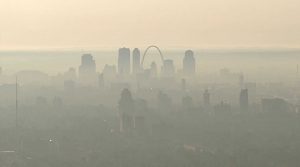
According to a new report released by the U.S. Environmental Protection Agency (EPA), the St. Louis metropolitan area has failed to meet the agency’s most recent ozone standards as ozone levels remain too high. The report moves St. Louis City, St. Louis County, St. Charles County, Jefferson County and parts of Franklin County from the marginal to moderate ozone level category, with more than 20 other regions across the country also labeled under moderate ozone classifications.

As a result, the region will need to adopt the standards designated back in 2015 that set the ozone limit to 70 parts per billion in effort to preserve human health and the environment by the new attainment date of August 3, 2024. Since the latest data showed ozone levels in the St. Louis area at 71 parts per billion, the new regulations issued under the EPA’s reclassification for the region will help protect area residents while limiting the influence of the industries that are a leading source of air pollution.

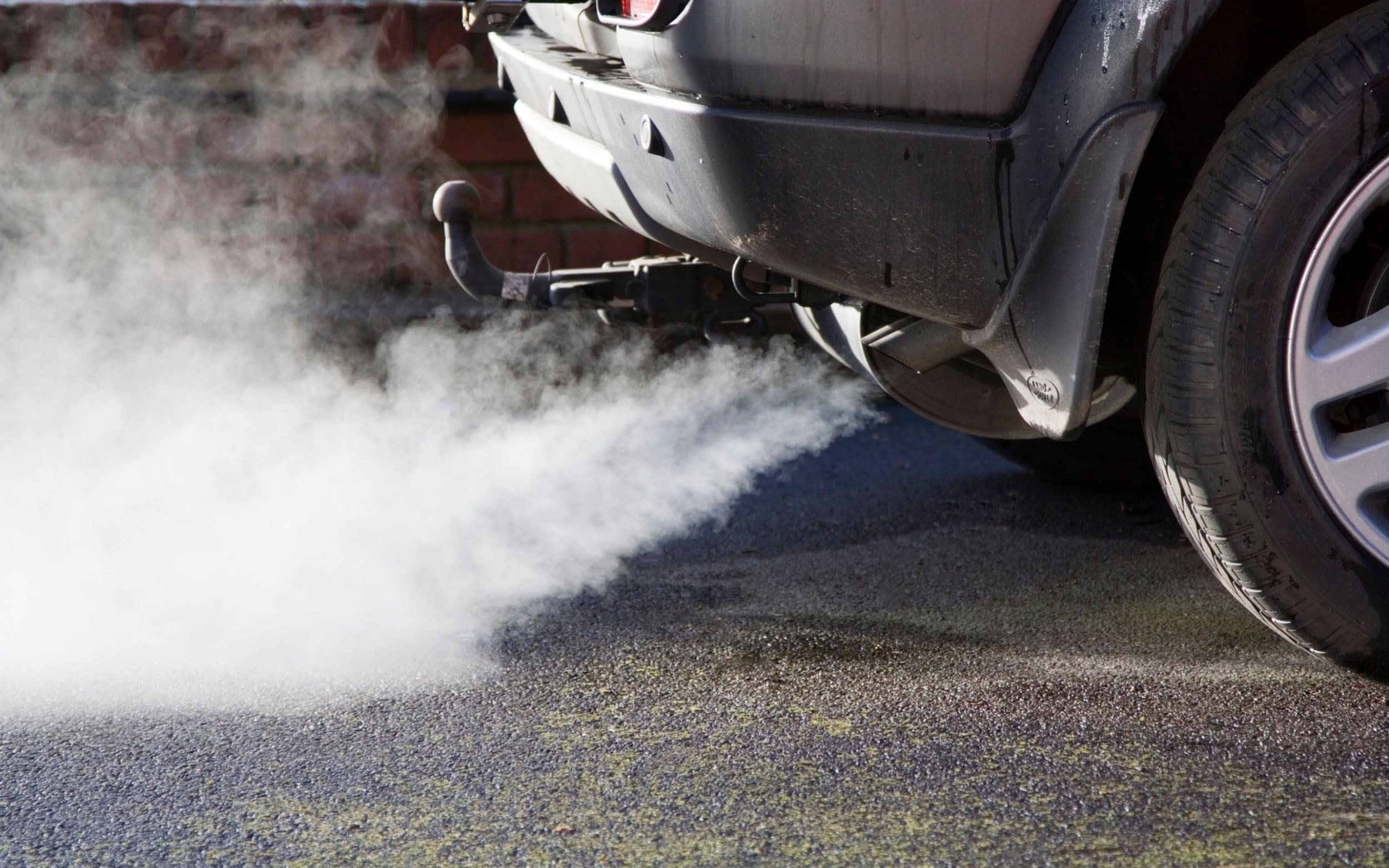
The shift is due to an increase in ground-level ozone in the area, which arises when emissions from vehicles, power plants and other sources react with sunlight. This puts vulnerable populations – including children and teens, anyone 65 and older, people who work or exercise outdoors, and those with existing lung disease or cardiovascular disease – more at risk from long-term exposure to the gas at ground level that can lead to asthma and other respiratory illnesses. Additionally, the EPA’s report corresponds with findings from the American Lung Association’s 2022 “State of the Air” report, which graded St. Louis City, St. Louis County and St. Charles County with F’s for having recorded higher ozone levels during the years covered by the report (2018-2020).

With that in mind, the Clean Air Partnership encourages St. Louisans to continue their efforts to take voluntary steps to reduce emissions, as those actions play a critical role in improving air quality conditions and enhancing lung health in the region. One way individuals can show they care about clean air is by utilizing alternative modes of transportation, including transit, carpooling, vanpooling, walking, biking or telecommuting as often as they are able to help improve outcomes. Businesses and municipalities can also work collectively to reduce their environmental impact by introducing paperless policies, implementing a fully remote or hybrid schedule for employees to cut back on commuter emissions, installing electric vehicle charging stations or bike racks in parking structures to promote sustainable modes of transportation and more.

Changes at any level can help contribute to a greener and cleaner environment. Together, we can take small steps forward to bring the region into attainment and keep the air quality in healthier ranges. Additional air quality information and other tips to help clear the air can be accessed by visiting the Clean Air Partnership’s website, liking the Clean Air Partnership on Facebook or by following the organization on Twitter @gatewaycleanair. To access the full EPA report, visit epa.gov.

MoDOT Paving the Way for Cleaner Air in the St. Louis Region

With a long-standing commitment to help improve air quality in the St. Louis metropolitan area, the Missouri Department of Transportation (MoDOT) recognizes that ozone pollution is not only extremely unhealthy for residents, but also hurts the economic viability of our region and can even threaten federal highway funding in the state. Since idling vehicles and their related emissions are one of the leading sources of air pollution, MoDOT values the importance of keeping area roadways cleared 24/7 and offers up information about possible congested areas to help reduce air pollution and keep the region’s air quality in healthy ranges.

For starters, MoDOT has eight solar-powered portable message boards along high-traffic interstates and highways that display the daily ozone forecast during the air quality forecasting season and are also used for traveler information in times of major incidents on the highways to help alleviate congestion. Over half a million motorists daily have the opportunity to view these messages and stay informed about ozone pollution levels in the region, so they can plan to modify their commute for the following day. In addition to their smaller portable message boards providing daily air quality information, MoDOT uses its large stationary message boards on red ozone days, as well as places a warning message on its real-time traffic information website. With these three components being used for traveler information, MoDOT has the potential to reach more than a million motorists during critical ozone alerts.

To help further reduce environmental impact, MoDOT’s Gateway Guide program strives to better manage the growing amount of traffic on state-maintained roadways. The Gateway Guide team works around the clock and uses many state-of-the-art devices that, when combined, serve as powerful tools to relieve traffic congestion and improve safety. The program uses real-time traffic information to help reduce traffic delays caused by incidents, work zones and the rising number of vehicles on the highways. By monitoring the roadways, the team can direct the appropriate emergency response forces to those incidents – including departmental emergency operations to clear minor incidents or to direct traffic around major ones. The team also provides this information in several formats for drivers – primarily by social media, text or overhead message signs. Moreover, MoDOT carries out a yearly traffic signal optimization program on arterial corridors, updating timing plans and coordination across designated corridors, which reduces emissions by decreasing travel times and reducing stops and delays on state routes.

Additionally, MoDOT recently entered into a partnership with WAZE as part of the Connected Citizen Program (CCP), which brings cities and citizens together by allowing users to alert fellow motorists of crashes, construction, road hazards or road closures they may not be anticipating. In turn, this enables MoDOT and other government partners to respond more efficiently to accidents and congestion, resulting in one of the most succinct, thorough overviews of current road conditions today.

Beyond these various initiatives that help motorists to do their part for cleaner air, on days when air quality is forecasted to approach unhealthy levels, MoDOT changes its own internal operations so as not to cause excess ozone-causing emissions. A main component involves reducing maintenance operations that may cause traffic congestion, except for safety reasons, on forecasted red ozone days. The organization also engages its employees in the regional clean air effort, sharing the daily air quality forecast with them and encouraging use of alternative modes, such as carpooling, during the ozone season.

For more information on MoDOT’s available resources and their clean air connection, visit modot.org. And be on the lookout for a future article highlighting the Illinois Department of Transportation’s (IDOT) initiatives to help clear the air.  To learn more about the link between sustainability and air quality, explore the Clean Air Partnership’s website, like us on Facebook or follow us on Twitter at @gatewaycleanair.

Spotlight On: Midwest Recycling Center

Midwest Recycling Center (MRC) is the premiere destination for community and residential recycling in Missouri, Illinois and the surrounding areas. With four facilities conveniently centrally located in the United States, MRC provides its clients with electronics recycling services, Information Technology Asset Disposition, Medical and Lab Asset Disposition, and Data Destruction Services, with the goal of properly diverting electronic waste from landfills while offering suitable solutions to the ongoing issues of identity theft and environmental liability.

MRC was proud to participate in the 2021 St. Louis Green Business Challenge, which has contributed to the organization’s overall sustainability efforts over the years and continues to be a valuable resource for them. In 2021, MRC earned the esteemed title of Challenge Champion for completing work with the Leader scorecard and committing to continued implementation of deeper sustainability strategies.

“MRC is committed to promoting sustainable practices in our work with other Challenge participants, businesses and communities throughout the St. Louis region,” said Greg Cooksey, Director of Business Development and Compliance Officer at MRC. “We hold ourselves accountable for the environmental impacts of our business and advocate for R2 Certified responsible electronic recycling. I am proud of our Green Team and all our associates, who work hard every day to deliver a high service level to all MRC customers.”

Among MRC’s impressive accomplishments to receive recognition in the Challenge was the servicing of more than 100 recycling events combining e-Waste and document destruction. Following the mantra of “Reduce, Reuse, Recycle,” MRC either de-manufactures items collected down to a component level or finds a home for the item to be reused. Since reuse is the most environmentally friendly form of recycling, MRC tries to reuse items in the form of parts or as a working unit, as long as the client does not require the item be destroyed. To prevent any possibility of data mining, MRC also uses a data wiping system that serializes and generates a certificate of destruction for all recycled drives. Any hard drives that fail the wiping procedure or are unable to be discovered by the system are put through MRC’s shredder or degausser to make sure that customer data is completely irretrievable.

Once all recycled material is broken down to a component level, such as steel, aluminum, plastic, lead, etc., it is then shipped to an EPA and R2/RIOS approved facility to be shredded and separated further. The raw material is then melted or smelted and recycled back into a new product. Since MRC is registered with the Environmental Protection Agency (EPA) and is Level 4 registered with the Missouri Department of Natural Resources, the company has a zero-landfill policy, meaning that none of the material will end up in a hazardous landfill which is also a positive for the region’s air quality.

The Clean Air Partnership is delighted to recognize the efforts of companies such as Midwest Recycling Center that continue to take action for cleaner air by channeling their time and energy towards practicing sustainability. For additional information on how your company can get involved in the St. Louis Green Business Challenge, subscribe to their weekly E-Newsletter or visit www.stlouisgreenchallenge.com.  To learn more about the link between sustainability and air quality, explore our website, like us on Facebook or follow us on Twitter at @gatewaycleanair.

“Don’t Pollute. Switch Up Your Commute.” for Car Free Day

With the first day of fall quickly approaching, that means Car Free Day is also right around the corner. Thursday, September 22, is the day when people all around the world are preparing to ditch their keys to be car-free to help reduce traffic congestion and work towards creating a greener environment. While our cars are convenient and offer a number of benefits, over 1.5 billion motor vehicles travel the streets and roads of the world today, releasing a dangerous amount of auto emissions into the atmosphere.

Since transportation is one of the biggest contributors to air pollution in the region, the Clean Air Partnership, Citizens for Modern Transit and more than half a dozen partners – who collectively provide an array of transportation options that extend beyond driving in single-occupancy vehicles along with resources and incentives for doing so – joined forces to launch a summerlong “Don’t Pollute. Switch Up Your Commute.” campaign. As summer comes to an end, area residents are still encouraged to visit SwitchUpYourCommute.com to access a wealth of information on how the ways they choose to travel impacts the quality of air we breathe, while motivating them to modify commuting behaviors as often as they can.

You’ll find there are plenty of resources available for St. Louisans to keep their vehicles off area roads on Car Free Day and beyond to help take heat off the planet and our lungs:

    • Metro Transit – The region’s public transit system offers great alternatives for the work commute or an option to hopping in your car for short trips. Serving St. Louis City, St. Louis County and St. Clair County, Ill., Metro Transit allows riders to walk to a nearby stop, or park and take a train or bus, or a combination of the two, to get where they are going – safely, comfortably and conveniently. Those who live in Madison County, Ill., will find Madison County Transit to be another great alternative, as well as SCCTD for St. Clair County residents.
    • Carpool/Vanpool – RideFinders is the free, St. Louis regional commuter carpool and vanpool program. By using the organization’s easy online ride-matching service, RideFinders connects area workers looking to share the ride, the driving and the cost of a smart and sustainable commute. Moreover, RideFinders provides the van, pays for gas, maintenance and insurance for a low monthly cost. Commute with Enterprise also offers a choice to those looking to share a ride with neighboring coworkers in a SUV, crossover or van. Everyone splits the costs and driving duties, saving passengers valuable time and money while doing the right thing for the community and environment.
    • Walk or Bike – For individuals who live close to work, choosing to walk or bike, instead of idling in rush hour traffic, helps take cars off area roads and reduces the amount of ozone-forming emissions generated. Walking and biking can also be easily paired with transit, as all Metro Transit and MCT buses are equipped with bike racks so individuals can bring their bikes on MetroLink or park it at one of the stations’ bike racks.
    • Telecommute – As traffic continues to ramp back up in the region, so does the potential for increased auto emissions that contribute to ozone formation. For those who can work from home, continuing to telecommute full-time or at least occasionally is encouraged.

For a host of additional tips on how to achieve cleaner air all year long and not just for special occasions, visit our website, like us on Facebook or follow us on Twitter at @gatewaycleanair.


Clean Air Partnership and CMT Release 2022 Air Quality Forecasting and “Don’t Pollute. Switch Up Your Commute.” Campaign Update

The St. Louis Regional Clean Air Partnership today released data from the first half of the 2022 air quality forecasting season. While the findings reveal no poor or “red” air quality days to-date, the need to continue taking steps to help clear the air remains important as we head into the final stretch of summer. To that end, the Clean Air Partnership continues to work collaboratively with Citizens for Modern Transit (CMT) and other partnering organizations to inform people the way they choose to travel impacts the quality of air area residents breathe, while motivating them to modify commuting behaviors as often as they are able through the summerlong “Don’t Pollute. Switch Up Your Commute,” campaign.

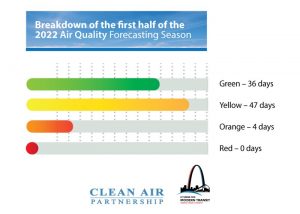
Over the past few months, the St. Louis region has seen its share of scorching temperatures and a related increase in the number of days when the air quality has reached moderate to unhealthy ranges. At the mid-point of the air quality forecasting season, yellow was the dominant color with 47 moderate air quality days, followed by 36 green days where the air quality was good, and four unhealthy orange days for sensitive populations, including children, older adults and those with existing lung conditions. This reinforces the need for individuals to prioritize lung health by minimizing exposure to air pollution and taking action to reduce harmful emissions that contribute to the problem.

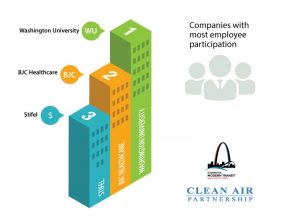
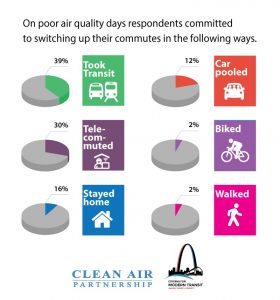
As part of the “Don’t Pollute. Switch Up Your Commute.” campaign, hundreds of St. Louisans signed up to receive daily air quality forecasts at SwitchUpYourCommute.com to stay informed about ozone pollution levels in the region and how those levels can affect their health. Local companies with the most employee participation included Washington University St. Louis, BJC HealthCare and Stifel. As part of this effort, those registered received a text when the air quality was forecasted to be unhealthy, encouraging them to modify commuting behaviors. According to responses, 39% took transit, 30% telecommuted, 16% stayed home (if the unhealthy forecast fell on a weekend), 12% carpooled, 2% biked and 2% walked.

“Though recent heavy rainfall and intermittent storms have helped regulate temperatures during what has traditionally been the hottest part of the year, we still remain in the peak of summer, when weather conditions create a risk for higher ozone pollution levels and ozone-related health concerns,” commented Susannah Fuchs, Director of Clean Air for the American Lung Association in Missouri, which oversees the St. Louis Regional Clean Air Partnership. “It’s very important that area residents stay informed about the quality of the air we breathe and continue to take voluntary steps to reduce emissions to help improve outcomes.”

For more information about the “Don’t Pollute. Switch Up Your Commute.” campaign, visit www.SwitchUpYourCommute.com.

Spotlight On: Maritz

Founded in 1894 as E. Maritz Jewelry, the company got its start as a wholesaler and manufacturer of fine jewelry and engraved watches. Better known today as Maritz, the company is now a leader in sales and marketing services that designs and operates employee recognition and reward programs, sales channel incentives and customer loyalty programs. Despite the shift in direction, Maritz has remained committed to doing their part for the environment and air quality by reducing waste, water consumption, power usage and paper dependence to help future generations thrive.

Maritz was a proud participant in the 2021 St. Louis Green Business Challenge, shifting focus from their St. Louis-based Green Team to a more hybrid Green Team that incorporated its field offices and remote workers using Microsoft Teams. During the 2021 Challenge, Maritz earned the esteemed title of Challenge Champion for completing work with the Leader scorecard and committing to continued implementation of deeper sustainability strategies.

“I am amazed at the adaptability that the St. Louis Green Business Challenge has displayed during the COVID-19 crisis,” said Chuck Winkle, Maritz Green Team Board Member. “Businesses changed radically and the Challenge team at the Missouri Botanical Garden responded with innovative methods that allowed the participants to still make improvements.”

Within the local Maritz facilities, the company worked to replace all existing natural draft gas boilers with newer condensing hot water boilers, which allowed for a 17% increase in overall energy efficiency, improving from 80% to 97%. At the St. Louis headquarters, Maritz also entered into the planning phase for a construction project to repurpose a vacant 35,000 square-foot building into a multi-purpose green space. Moreover, the replacement building will save the company on average 20,000 therms per year.

Beyond these impressive accomplishments, Maritz partnered with Greg Cooksey at Midwest Recycling Center (MRC) to organize an e-Waste recycling event last spring. In all, the City of Fenton and Maritz collected over 15 tons of equipment that was diverted from landfills. The event was deemed a huge success and collected the third largest amount of electronic waste over the past 12 years of hosting it.

Last but not least, Maritz Motivation – a division of Maritz that works with marketing, human resources, sales and channel marketing executives to provide consumer loyalty, channel loyalty, employee engagement and sales incentive solutions to Fortune 100 companies – began offering clients eco-friendly options for the Client Fulfillment and Mailing Services division. This included upcycled, dissolvable and recycled materials for containers, packing materials and communications.

The Clean Air Partnership is pleased to recognize the efforts of businesses such as Maritz that continue to take action for cleaner air by channeling their time and energy towards practicing sustainability. For additional information on how your company can get involved in the St. Louis Green Business Challenge, subscribe to their weekly E-Newsletter, or visit www.stlouisgreenchallenge.com. To learn more about the link between sustainability and air quality, explore our website, like us on Facebook, or follow us on Twitter at @gatewaycleanair.

Create a Buzz for National Honey Bee Day to Help Clear the Region’s Air

Beekeepers, beekeeping clubs and associations, and honey bee enthusiasts from all across the country will join forces for National Honey Bee Day on August 20th to honor the insect responsible for more than 1/3 of the food we eat. The buzzing celebration recognizes their contribution to our everyday lives as a means of protecting this critical species for future generations, as well as pays homage to beekeepers whose efforts ensure we have bees to pollinate our crops and support the plants that provide the air we breathe.

While you’ve likely seen #SaveTheBees plastered on t-shirts, mugs and images online, you’ve maybe asked yourself – why are honey bees so important anyways? The simplest answer is that bees are one of the world’s most important pollinators for food crops. Pollination occurs when insects like bees travel from one plant to the next, fertilizing the plant. Honey bees have little hairs all over their body that attract pollen, and when the pollen from a flower sticks to a bee, it then travels along to its next destination. When a bee lands on the next plant or flower, the pollen is distributed and results in cross-pollination, which is a process that later produces fruits, vegetables and seeds.

You also might be surprised to learn that the value of bees goes beyond supplying the food we eat, as they’re a vital part of maintaining the lungs of our planet. Pollination yields many environmental benefits for clean air as flowering plants and trees produce breathable oxygen by utilizing the carbon dioxide produced by plants and animals through respiration. However, levels of carbon dioxide in the atmosphere have been rapidly increasing in the last century due to increased burning of fossil fuels and destruction of vital forests. Without honey bees and other pollinators, populations of plants would decline, even if soil, air, nutrients and other life-sustaining elements were available.

Just as we count on the hard work of honey bees to keep our food and oxygen sources growing and accessible, they’re counting on us to build and support a planet that welcomes them. If you’re looking for ways to celebrate National Honey Bee Day at home next Saturday, there are plenty of projects that can make a huge difference for your local bee population. For starters, consider making your yard more bee-friendly and air-quality friendly by committing to using environmentally conscious pesticides, since those intended for weeds or nuisance bugs can have deadly consequences for innocent pollinators and result in habitat loss. Furthermore, stocking your cabinets with whole-comb honey and local, raw honey not only supports small, local beekeepers, but through supply and demand also encourages pollinators in your area. As an added bonus, eating local honey has been linked to a myriad of health benefits, including a strengthened immune system and the ability to reduce seasonal allergies.

Doing your share for cleaner air and helping to protect the bees for National Honey Bee Day is a reward that’s even sweeter than the honey they create!  To learn more about the link between living greener and our air quality, visit the Clean Air Partnership’s website at cleanair-stlouis.com, like us on Facebook or follow us on Twitter at @gatewaycleanair.

Understanding Particle Pollution and Your Health

The more researchers learn about the health effects of particle pollution, the more dangerous it is recognized to be. In the years covered by the American Lung Association’s latest “State of the Air” report (2018-2020), findings reveal close to 63.2 million people lived in the 96 counties that experienced unhealthy spikes in particulate matter air pollution, which represents close to 8.9 million more people over a larger area than in last year’s report and more people than in any of the last seven reports. Likewise, some 20.3 million people lived in the 21 counties where year-round particle pollution levels do not meet the national air quality standard and received a failing grade. St. Louis is among the areas that received an “F” grade, ranking 24th for the most-polluted U.S. cities by year-round particle pollution.

Particle pollution — also known as particulate matter — refers to a mixture of tiny bits of solids and liquids in the air we breathe that comes from a variety of sources. These include factories, power plants, diesel- and gasoline-powered motor vehicles, and equipment that either directly emit fine particles or generate precursors such as nitrogen oxides (NOx) that can form into fine particles in the atmosphere. Though these individual particles may be too small to be visible to the human eye, when pollution levels are high, they can cause the air to appear thick and hazy, making it dangerous to breathe and triggering illness, hospitalization and premature death in some cases.

While anyone who lives where particle pollution levels are high is at risk, some people face an increased risk based on their underlying health and other characteristics. Research has shown that groups most at risk include pregnant people and fetuses, infants, children, older adults, people with existing lung conditions, people who work or exercise outdoors and those who live along busy highways or roadways. Exposure to particulate matter emitted from motor vehicles has been linked to poor birth outcomes, reduced lung and cognitive development, development and worsening of chronic respiratory and cardiovascular diseases, dementia and cancer. Decades of research have also firmly established that breathing particle pollution day in and day out can even be deadly, with elevated risks of mortality from cardiovascular and respiratory causes, including heart disease, stroke, influenza and pneumonia.

The good news is, cleaning up particle pollution does make a difference, and studies have shown a consistent relationship between decreased particle pollution levels in communities and improved respiratory health in both children and adults. Thankfully, the St. Louis region offers plenty of resources to aid in this effort to improve the quality of the air we breathe and protect lung health.

For starters, the Clean Air Partnership encourages area residents to visit SwitchUpYourCommute.com to learn more about the air quality benefits of taking transit, carpooling, vanpooling, walking, biking or telecommuting. The site also provides detailed information about all transportation options that extend beyond driving in single-occupancy vehicles available on both sides of the Mississippi River – and links to associated schedules, pricing, programs, ride matching services, incentives and more.

For more information about the health effects of exposure to particle pollution and tips to reduce emissions, visit the Clean Air Partnership website, like us on Facebook or follow @gatewaycleanair on Twitter. To access the American Lung Association’s 2022 “State of the Air” report, visit lung.org/sota.

Spotlight On: The City of Clayton

As a returning participant in the St. Louis Green Cities Challenge in 2021, the City of Clayton reinvented its commitment of sustainability through the identification of new priorities and implementation of new projects to make Clayton a greener place to live, work and learn.

Known for its bustling business district and charming residential neighborhoods, the City of Clayton aims to foster a diverse and inclusive community by offering something for everyone. With a strong record of valuing sustainability, the city has been recognized for its outstanding recycling programs, use of rain gardens, city-wide smoking ban and dedication to green building design embedded in its culture and operations. Led by the city’s Sustainability Committee, Clayton continues to prioritize green practices, identifying additional ways they can continue to be a sustainability leader in the region.

During the 2021 Challenge, the City of Clayton Parks & Recreation Department began to replace High Pressure Sodium (HPS) lights in the parks with LED light bulbs, which are more energy efficient and produce zero toxic elements. Clayton’s Public Works Dept. also replaced all compact fluorescent bulbs in City Hall, taking advantage of Ameren Missouri rebates that offer instant savings for purchasing qualified LEDs.

Moreover, the City of Clayton’s Parks and Public Works Superintendents took a new approach to storm clean-up last year to improve efficiencies. While these departments typically work independently, they determined that clearing streets, sidewalks and parks by area of Clayton as one coordinated unit would result in a significant reduction in miles driven in addition to labor costs, reducing emissions, etc. To take things one step further, the city’s Public Works and Parks & Recreation Departments consolidated mowing contracts to cut back on the number of contractors working in the city, thereby reducing the number of vehicles/equipment and associated emissions. The Public Works Department has also been recycling concrete, asphalt and steel on its construction projects since 2009, diverting over 35,000 tons of construction materials from landfills, which also positively benefits the quality of the air we breathe!

Last but not least, the City of Clayton has gone green at City Hall by transitioning to online operations for various functions that used to take place in person, saving paper and other office supplies, as well as reducing commute times by eliminating the need to drive for trips to their facilities. Two R-22 AC chiller units – which contain ozone-depleting hydrochlorofluorocarbon substances – were also replaced at City Hall-Fire Station with more eco-friendly, energy efficient units to help improve air quality.

For additional information on the sustainable efforts underway by the City of Clayton and how your municipality can get involved in the Challenge, subscribe to the bi-monthly E-Newsletter or visit www.stlouisgreenchallenge.com.  To learn more about the link between sustainability and air quality, explore the Clean Air Partnership website, like us on Facebook or follow us on Twitter at @gatewaycleanair. 


Spotlight On: Cortex Innovation Community

Founded 20 years ago through a collaboration of Washington University, BJC HealthCare, University of Missouri – St. Louis, Saint Louis University and the Missouri Botanical Garden, the Cortex Innovation Community is an internationally recognized, 200-acre urban hub of innovation and entrepreneurship focused on accelerating inclusive economic growth in St. Louis. As a place for big thinkers and risk takers, the district strives to create a space where businesses and the people who create, work for and access them are supported to help make the region globally competitive.

Cortex Innovation Community was pleased to participate in the 2021 St. Louis Green Business Challenge with a focus the development of a districtwide Sustainability Plan. During the Challenge, Cortex Innovation Community earned the esteemed title of Challenge Champion for completing work with the Leader scorecard and committing to continued implementation of deeper sustainability strategies.

The framework for the Cortex Sustainability Plan will help guide future decision-making and provide a structure and roadmap to improve the health of their environment and community. Part of the strategy focuses on supporting and partnering with regional sustainability organizations to add value to their ongoing goals and objectives, while leveraging existing initiatives and using the hub for innovation and a testing ground for new technologies. Other areas of focus for the Sustainability Plan include District Building Design Standards (for tenants); Placemaking & Landscaping; Regeneration & Living Infrastructure; Mobility & Transportation; Energy & Emissions; Waste & Circular Economy; Food & Nutrition; Beauty & Vibrancy and more.

Among Cortex Innovation Community’s other impressive accomplishments to receive recognition in the Challenge was a collaboration with Native Landscape Solutions to plant native Missouri prairie grass to help restore biodiversity and soil health to a section of the Cortex Commons. Another partnership with PocketParks helped to create a sunflower field on the long vacant block at Forest Park and Vandeventer Avenues, while an additional partnership was forged with Cambridge Innovation Center (CIC) to organize a trash pick-up event for the district.

To further reduce environmental impact, Cortex Innovation Community also installed eight electric vehicle chargers on the first floor of their parking garage to make it easier for the community to adopt the use of electric vehicles, which are better for the air because they reduce the amount of harmful CO2 emissions released into the atmosphere.

The Clean Air Partnership is delighted to recognize the efforts of entities such as the Cortex Innovation Community that continue to take action for cleaner air by channeling their time and energy towards practicing sustainability. For additional information on how your company can get involved in the St. Louis Green Business Challenge, subscribe to their weekly E-Newsletter or visit www.stlouisgreenchallenge.com. To learn more about the link between sustainability and air quality, explore our website, like us on Facebook or follow us on Twitter at @gatewaycleanair.