
New “State of the Air” Report Highlights Ongoing Air Quality Challenges for the St. Louis Region As Forecasting Season Nears

As daily air quality forecasting resumes for the 2026 season on May 1, the American Lung Association’s newly released “State of the Air” report shows that residents across the St. Louis region continue to face unhealthy air—even after decades of progress to reduce pollution. 

The national report, which examines air quality data from 2022–2024, finds that 44% of people nationwide—approximately 152.3 million individuals—live in areas that received failing grades for unhealthy levels of ozone or particle pollution. While particle pollution showed slight improvement compared to long-term trends, ozone pollution worsened, affecting more people than in each of the previous five reports and underscoring the need for continued regional, state and local action. 

A long-term look at data for the St. Louis region reveals both progress and persistent concern. In the late 1990s, the region averaged nearly 50 high-ozone days each summer. In the most recent reporting period, that number dropped to an average of just over 10 days per year—a clear indication that air quality programs, cleaner technologies and voluntary emission reductions have made a difference over time. 

However, recent rankings show that the region still faces substantial challenges. For the second consecutive year within the past decade, the St. Louis metro area ranked among the top 25 most ozone-polluted cities in the U.S., tying for 24th out of 226 metropolitan areas. The region also ranked 31st nationally for annual particle pollution. 

The report also adds to growing evidence that climate-related factors—such as rising temperatures, prolonged drought and increased wildfire activity—are making it harder to protect hard-earned gains in air quality. These conditions contribute to more frequent high-ozone days and short-term pollution spikes, increasing health risks for millions of people nationwide. 

In the bi-state St. Louis non-attainment area, all eight counties received failing grades for ozone pollution in this year’s report. Ozone exposure remains the most widespread air pollution concern in the country. During the three-year period analyzed, 38% of the U.S. population—about 129.1 million people—were exposed to ozone levels that put their health at risk. That includes tens of millions of children, older adults, and people with asthma or other respiratory conditions. Nearly half of all children in the U.S. are breathing unhealthy air, including almost 500,000 kids in Missouri alone. 

As the summer air quality season approaches, everyday choices can make a meaningful difference. Actions like adjusting travel habits, conserving energy and staying informed about air quality conditions help reduce pollution and protect those most vulnerable to unhealthy air. 

The Clean Air Partnership encourages residents throughout the St. Louis region to stay informed about local air quality conditions, especially on orange or red air quality days, when people should consider adjusting outdoor activities to reduce exposure to polluted air. Daily, colorcoded air quality forecasts are available at CleanAir-StLouis, where individuals can also sign up to receive alerts by email or text through the U.S. Environmental Protection Agency’s EnviroFlash system. Forecasts are also shared on AirNow.gov, during First Alert 4 weather broadcasts and at FirstAlert4.com. In addition, CleanAir-StLouis offers air quality tips, seasonal updates and helpful resources. Residents can also stay connected by following the Clean Air Partnership on Facebook or on X @gatewaycleanair. 

To access the full American Lung Association 2026 “State of the Air” report, visit Lung.org.   

Spotlight On: Wildflowers

At Wildflowers, unique floral arrangements weren’t the only things in bloom throughout 2025. The company’s sustainability efforts also took root, earning recognition as a participant in the St. Louis Green Business Challenge at the Apprentice Level. Through thoughtful changes, Wildflowers continues to demonstrate care not only in its floral creations, but also for the environment and community it serves.

The team at Wildflowers shares a singular passion: creating beauty that moves, uplifts and inspires. From distinctive arrangements and seasonal wreaths to floral subscriptions and hands-on workshops, every piece reflects artistry, care and the belief that beauty can transform everyday moments. With more than 20 years in business, Wildflowers has grown not only creatively, but also in how they contribute to sustainability.

One impactful initiative during the 2025 Challenge included increasing sourcing from local, women-owned flower farms. By partnering with nearby growers, Wildflowers created a closed-loop sourcing model that ensures nearly all flowers are grown within 100 miles of St. Louis. This approach not only supports small businesses but also strengthens regional biodiversity and reduces carbon emissions associated with long-distance shipping.

Wildflowers also implemented composting and waste-reduction systems in the studio to minimize landfill waste and repurpose green materials. Biodegradable, plant-based waste is returned to the soil, enhancing fertility and helping create healthier conditions for future blooms, which is also beneficial for the region’s air quality.

Reducing the use of floral foam was another key Challenge objective. By opting for reusable chicken wire, pin frogs and moss bases, the team continued to produce striking designs while choosing more environmentally friendly methods. Wildflowers also shared this knowledge with the community through seasonal “foam-free” design classes, which blended creativity with environmental responsibility.

Beyond curating fresh florals, Wildflowers extended the life cycle of their floral products by introducing a botanical arts line that used dried flowers and repurposed natural materials. The company’s commitment to sustainability extended beyond its own studio as well; Wildflowers contributed sustainable floral décor for the St. Louis Green Business Challenge Awards event.

“Sustainability is at the heart of our creative process,” said Sara Ward, owner and creative director of Wildflowers. “Through the Challenge, we’ve refined how we design—choosing local blooms, working to eliminate floral foam and teaching our community that beauty and responsibility can thrive together.”

By growing eco-friendly initiatives alongside their floral work, Wildflowers continues to create lush bouquets, celebratory décor and meaningful additions to everyday life. Whether showcased in a museum, wedding or home, their designs stand out for both style and sustainability.

For more information about Wildflowers and how your organization can get involved in the St. Louis Green Business Challenge, subscribe to the Challenge’s bi-monthly E-newsletter or visit stlouisgreenchallenge.com. To learn more about the link between sustainability and air quality, explore the Clean Air Partnership’s website, like us on Facebook or follow us on X @gatewaycleanair.

Spotlight On: Vanimal

No company lives by its slogan quite like Vanimal. Their phrase, “We Meet You in the Wild,” is spot on when you learn they’ll fix your bicycle just about anywhere in St. Louis City or County. Vanimal is a new breed of professional mobile bike shop that meets riders wherever they are — at home, work, a park or even a favorite neighborhood spot — and services bikes on the spot. With more than 350 bicycle-specific tools and over 500 parts stocked inside their Mercedes Sprinter, Vanimal is prepared to handle most common bike issues efficiently and safely.

From flat repairs, chains and cables to tires, lights and accessories, Vanimal’s mission is simple: keep riders safe and confident on the road. Their core service offerings include three levels of tune-ups designed for every type of cyclist. The “Dust Bunny” provides a basic tune-up to ensure bikes are safe and ride-ready, while the popular “Bunny Hop” delivers a more detailed clean and major tune-up. For riders seeking a full refresh, the “Hare Raiser” complete overhaul strips the bike down, cleans and re-lubricates moving parts, and rebuilds it for like-new performance.

Beyond convenience and expertise, Vanimal’s green efforts have had a meaningful local impact. Through education, advocacy and partnerships with local businesses, schools and community groups, they help spread awareness about sustainable transportation and environmental responsibility across the region.

Sustainability plays a central role in Vanimal’s operations. As a participant in the 2025 St. Louis Green Business Challenge at the Apprentice Level, the mobile bike shop recycled 19 tires, 50 pounds of chains and 40 inner tubes through Laumeier Sculpture Park for use in its Art Camps. Vanimal also donated four children’s bikes to B-Works for refurbishing in the organization’s Learn to Ride youth program. In addition, the business exclusively uses Muc-Off products, which align with the company’s own Project Green Initiative.

Vanimal’s commitment also extended beyond recycling. During the Challenge, they volunteered on Earth Day with Forest ReLeaf to help transplant more than 200 trees, attended a St. Louis Zoo presentation on bird strikes and light pollution, and hosted two Balance Bike Camps for toddlers ages 2–3 through the St. Louis Public Library.

“I love being inspired by the like-minded businesses in the Green Business Challenge,” said Francesca DeRanzo, owner and operator of Vanimal. “It is so great to see what a big impact everyone can have for the St. Louis community and environment by working together and making small changes. Sustainability has always been important to me, and a large part of why I chose to start a mobile bike shop.”

For more information about Vanimal and how your organization can get involved in the St. Louis Green Business Challenge, subscribe to the Challenge’s bi-monthly E-newsletter or visit stlouisgreenchallenge.com. To learn more about the link between sustainability and air quality, explore the Clean Air Partnership’s website, like us on Facebook or follow us on X @gatewaycleanair.
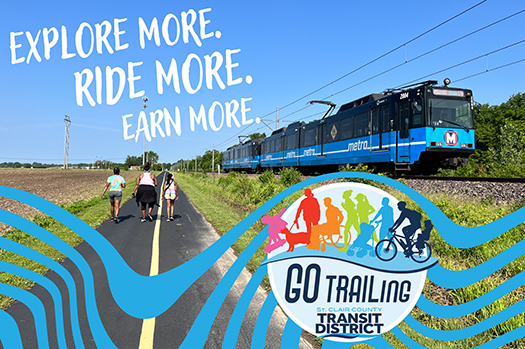
Area Residents Encouraged to Explore the MetroBikeLink System through SCCTD’s Summerlong “GO TRAILing” Program

Effort Incentivizes Participants of All Ages to Track Miles and Earn Prizes 

St. Clair County Transit District (SCCTD) is encouraging area residents to get out this summer and explore the MetroBikeLink system with its “GO TRAILing” program, being held in partnership with Citizens for Modern Transit. From May 9 to August 8, participants of all ages can earn incentives by tracking miles spent walking, biking, wheeling, running, skating or skipping along 39 miles of interconnected trails and bike paths throughout St. Clair County. Registration is free and can be completed at scctd.org 

By choosing active transportation and recreation on local trails, participants are also helping reduce vehicle trips, cutting down on harmful tailpipe emissions that contribute to poor air quality across the bi-state St. Louis region. Programs like “GO TRAILing” make it easy for individuals and families to support cleaner air while staying active and connected to their community. 

Prizes are awarded for tracking 10, 25, 50, 75 and 100 miles and include MetroBikeLink water bottles, “GO TRAILing” branded t-shirts and hats, monthly transit passes, bike helmets and bike lights. Participants who log 100 miles or more over the summer will also be entered into a drawing for one of three grand prizes: a $100 gift card, Bluetooth earbuds or Fitbit Fitness Tracker. 

Mile tracking is made easy through the “GO TRAILing” online system at scctd.org. Prizes may be picked up at St. Clair County Transit District’s office at 27 N. Illinois Street in Belleville, Monday through Thursday from 9 a.m. to 3 p.m. and Friday from 9 a.m. to noon, beginning May 10. 

“Since its inception in 2022, more than 38,500 miles have been tracked through this popular program, offering a fun and healthy way for individuals and families to get out and explore the MetroBikeLink system,” said Ken Sharkey, managing director for the St. Clair County Transit District. Those miles represent thousands of opportunities to choose cleaner, more sustainable travel options that benefit both personal health and regional air quality. 

Those who bike to work via the MetroBikeLink system can log those miles as part of the program. To celebrate National Bike to Work Day, St. Clair County Transit District and Citizens for Modern Transit will host a “pit stop” at the Belleville Transit Center on Friday, May 15, from 6 to 8 a.m., providing bicyclists with granola bars and information about the “GO TRAILing” program. 

To learn more, visit scctd.org or call 618-628-8090.